What Is a Witness Signature? (Witness Signature Meaning)
A witness signature is the signature of a third party — someone who isn't a party to the agreement — confirming that they personally watched you sign a document and that you appear to be who you claim to be. In plain terms, the signature of witness serves as a second set of eyes: it tells anyone reading the document later, "Yes, I was there, I saw this person sign, and it really was them." That's the witness signature meaning in a nutshell, and it's the answer most people are searching for when they ask what is a witness signature or what is signature of witness.
Think about why this matters. A signature on its own is just ink (or pixels) on a page. Nothing stops someone from forging a name, claiming they never signed, or arguing later that they were coerced into it. A witness closes that gap. They're not vouching for the content of what you're signing — they're not saying they agree with the terms or even that they read the document. They're simply attesting to the mechanics of the moment: this person signed, in front of me, and I believe they are who they say they are.
This is why witnessing has such deep roots in law. Historically, wills, deeds, and other high-stakes documents required witnesses precisely because there was no other reliable way to confirm identity and voluntariness after the fact. If a dispute arose — say, an heir contesting a will — the witness could be called to testify about what they saw. Courts still rely on this logic today. The Cornell Law School Legal Information Institute describes a witness broadly as someone who can give a firsthand account of an event, and signing a document is very much an "event" in the eyes of the law.
It's worth noting that a witness signature is different from notarization, even though people often lump the two together. A notary is a state-commissioned official who verifies identity, may administer an oath, and applies an official seal — adding a layer of formal, government-recognized authentication. A witness, by contrast, is usually just an adult who happened to be present, with no special credentials required in most cases. Depending on your state and document type, you might need one, the other, or both.
You'll also hear witness signatures come up alongside discussions like What Are the Elements of a Valid Contract? — because while a witness isn't always legally required for a contract to be valid, it can strengthen your position if that contract is ever challenged. The same goes for physical, ink-on-paper agreements; if you're curious how this fits into traditional signing methods, our post on What Is a Wet Signature? And Do You Still Need One? covers that ground in more detail.
Bottom line: a witness signature exists to protect everyone involved — the signer, the other party, and anyone who might need to rely on that document down the road.
Witness Signature vs. Notary: What's the Difference?
Here's where a lot of people get tripped up: a witness and a notary public are not the same thing, even though both show up in that "sign here" moment on important documents. The core difference comes down to three things — role, authority, and the legal weight their signature actually carries.
A witness is simply someone who watches you sign a document and then adds their own signature to confirm they saw it happen. That's it. They're not verifying your identity with an ID check, they're not administering an oath, and they don't need any special license or state commission to do the job. Your neighbor, your coworker, your cousin — as long as they're not a party to the contract and meet your state's age and competency requirements, they can usually witness a signature. Think of a witness as a human timestamp: they're there to say "yes, I saw this happen, and it wasn't forged."
A notary public, on the other hand, is a state-appointed official. In the U.S., notaries are commissioned by the Secretary of State in whichever state they operate, and that commission comes with actual legal authority. A notary's job goes beyond simply watching you sign. They verify your identity through government-issued ID, confirm you're signing willingly and knowingly (not under duress), and sometimes administer an oath if the document requires sworn testimony. Once satisfied, they stamp or seal the document with their official notarial seal — a mark that carries legal recognition across state lines and often internationally, depending on the document and destination.
So why does this distinction matter for your business? Because the level of legal protection is genuinely different. A witness signature adds a layer of accountability — if a signature is ever disputed, the witness can testify that they saw it happen. But a notarized signature carries more formal legal weight because it involves a state-authorized verification process, not just an observation. That's why documents like real estate deeds, powers of attorney, and certain estate planning paperwork typically require notarization rather than just a witness. Courts and government agencies treat notarized documents with a higher presumption of authenticity, according to guidance from the National Notary Association.
For everyday business contracts — vendor agreements, employment offers, NDAs — a witness signature is usually enough. You don't need the added expense or hassle of finding a notary for routine paperwork. But if you're dealing with something that could end up in probate court or involves transferring property, check your state's requirements before assuming a witness will cut it. Some states are stricter than others, and getting this wrong can mean redoing paperwork later — which nobody has time for.
If you're managing a mix of documents that need witnesses, notarization, or neither, Dochives can help you keep the signing process organized and legally sound without the guesswork.
Legal Requirements for a Valid Signature of Witness
Not just anyone who happens to be standing nearby can serve as a witness. If you've ever wondered what actually makes a signature of witness hold up in court, it comes down to three core requirements: the witness must be of legal age, mentally competent, and impartial to the transaction. Skip any one of these, and you risk having the entire document challenged down the road.
Age requirements. In most U.S. states, a witness must be at least 18 years old — the standard age of majority. This isn't a universal federal rule, though; witness requirements are largely governed by state law, so it's worth checking your specific state's statutes if you're dealing with something like a will or a power of attorney. The Uniform Law Commission has pushed for consistency across states through acts like the Uniform Probate Code, but variations still exist. If you're witnessing a document in Texas versus New York, don't assume the rules are identical.
Mental capacity. A witness needs to understand what they're actually doing — that is, confirming they watched someone sign a document and can vouch for it later if needed. This sounds obvious, but it matters legally. Someone who's heavily medicated, cognitively impaired, or otherwise unable to understand the significance of the act generally can't serve as a valid witness. Courts have thrown out witnessed documents before because the witness couldn't demonstrate they understood their role at the time of signing. Think of it this way: a witness is essentially a human safeguard against fraud, and a safeguard that doesn't understand its own job isn't much of a safeguard at all.
Impartiality. This is where a lot of small business owners and freelancers trip up. A witness generally can't be a party to the document, a beneficiary of it, or someone with a direct financial stake in the outcome. If you're signing a contract with a business partner, that partner's spouse probably shouldn't witness it if they'd benefit from the deal. This rule exists to prevent conflicts of interest — imagine trying to prove a contract was signed fairly if the only witness stood to gain from it. For wills specifically, many states go further and disqualify "interested witnesses" entirely, meaning anyone named in the will as a beneficiary. The American Bar Association offers useful consumer guidance on estate planning documents and witness disqualification rules.
There's also a practical dimension: the witness typically needs to be physically present and actually observe the signature happen in real time — not sign off on it after the fact based on someone's word. For notarized documents, additional identity-verification standards apply, which the National Notary Association outlines in detail.
Getting these requirements wrong doesn't just create a paperwork headache — it can unravel a contract, a lease, or an estate plan entirely. That's exactly why more business owners are turning to platforms that build compliance into the signing process itself. Try Dochives free and see how much faster professional document signing can be, without second-guessing whether your witness requirements hold up.
Common Documents That Require a Witness Signature
So which documents actually need a witness looking over your shoulder while you sign? I get asked this a lot, and the honest answer is: it depends on the document type and where you live. But some categories show up again and again, so let's walk through the usual suspects.
Wills are probably the classic example. If you've ever helped a parent or grandparent draft a will, you probably remember someone mentioning that it needs witnesses — usually two, and in most states, they can't be people who'll inherit anything under the will. That's not bureaucratic red tape for the sake of it; it's there to prevent fraud and undue influence, especially since the person who wrote the will isn't around to confirm it later. The American Bar Association has solid resources if you want to go deeper on estate planning requirements.
Deeds, especially real estate deeds transferring property ownership, often need a witness signature too, sometimes in addition to notarization. Selling a house, transferring property to a family member, adding someone to a title — these moments carry real financial weight, so states want extra eyes confirming the signer is who they say they are.
Affidavits are sworn written statements, and because you're essentially putting your word on the line under penalty of perjury, many jurisdictions require witnessing or notarization (sometimes both). Think of an affidavit like testimony you'd give in court, just on paper — that's why the formality matters.
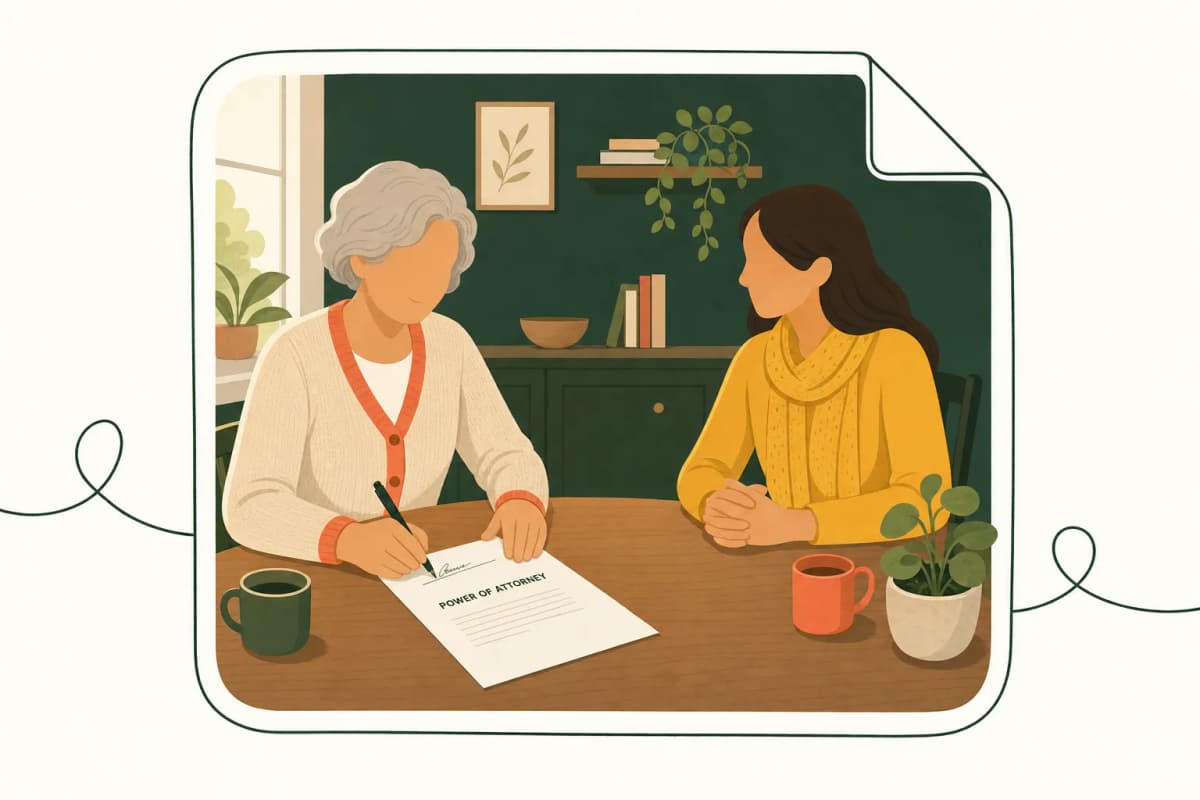
Powers of attorney are another big one. When you're handing someone else the legal authority to make financial or medical decisions on your behalf, that's serious business. A witness signature helps confirm you weren't pressured or confused when you signed away that authority, and if you want a step-by-step walkthrough, our guide on how to sign a power of attorney document covers the process in detail. The National Institute on Aging touches on this in the context of planning for incapacity, which is a good example of why these safeguards exist.
Then there are certain contracts — not every contract, but specific ones like prenuptial agreements, some loan documents such as a seller financing contract, a land purchase agreement, or contracts involving significant financial transactions. Business owners signing partnership agreements or major vendor contracts sometimes choose to add a witness even when it's not strictly required, just for extra protection if a dispute comes up later.
Here's the tricky part: requirements vary by state and by document type, so what's mandatory in Florida might be optional in California. If you're running a small business and constantly dealing with contracts, wills for succession planning, or powers of attorney for partners, keeping track of witnessing rules manually gets old fast.
That's actually where a platform like Dochives comes in handy — it helps you manage signing workflows so you're not guessing whether a document needs a witness, a notary, or both. Try Dochives free and see how much smoother document signing can be when you're not second-guessing the paperwork.
Who Can (and Cannot) Serve as a Witness
So, who's actually allowed to stand there and put their name on the dotted line as your witness? The short answer: almost any adult with no stake in the outcome. But "almost" is doing a lot of work in that sentence, and getting this wrong can quietly unravel an otherwise perfectly good document.
Let's start with the baseline. Most states require a witness to be at least 18 years old and mentally competent — meaning they understand what they're watching and can accurately recall it later if a court ever asks. Beyond that, the biggest disqualifier isn't age or competence. It's interest.
The "No Personal Stake" Rule
A witness's entire job is to be a neutral observer. If they have a personal or financial interest in the document, that neutrality evaporates — and so does much of the legal weight of their signature. Think about it: would you trust a referee who owns a stake in one of the teams? Courts feel the same way about witnesses.
This means the following people are usually poor (or outright disqualified) choices:
- Parties to the document. You can't witness your own contract, and typically neither can the other signer.
- Beneficiaries. This one trips people up constantly with wills. If someone stands to inherit under a will, most states — and long-standing common law tradition — say they shouldn't witness it. In fact, some states will void that person's inheritance even if the will itself stays valid, precisely to remove the temptation to fudge things. The Uniform Probate Code offers helpful background on how many states approach this issue.
- Close family members, in some jurisdictions, especially for wills and powers of attorney. Rules here vary quite a bit by state, so it's worth a quick check of your local statutes before you ask your spouse or sibling to sign.
- Anyone financially connected to the transaction — a business partner with equity in the deal, for example, or someone who'd benefit if a loan gets approved.
Who Usually Passes the Test
Good witnesses are, almost by definition, boring in the best way: uninvolved, unbiased, and simply present. A coworker from another department, a neighbor, a friend who has nothing to do with the transaction — these are the people you want. For business documents specifically, many entrepreneurs just grab a colleague or an office assistant, which works fine as long as that person has zero financial interest in the agreement.
Why This Actually Matters
Here's the real-world consequence: if a disqualified witness signs, and the document later gets challenged — in a probate dispute, a contract disagreement, whatever — a court can toss out that signature entirely. That can leave you with a document that looks valid on paper but has no legal teeth when it counts.
The good news? You don't have to memorize every state's quirks to get this right. Platforms built for professional document signing can help route the right people to sign and witness in the correct order, flagging issues before they become expensive problems. If you want to see how that works in practice, try Dochives free and take a look for yourself.
State and Country Variations in Witness Signature Laws
Here's something that trips up a lot of small business owners: there's no single, universal rulebook for witness signatures. What counts as valid in Texas might not fly in New York, and what works in the U.S. often looks completely different in the UK or Australia. If you're running a business that deals with clients or partners across state or national lines, this matters more than you'd think.
Let's start closer to home. In the United States, witnessing requirements are largely determined at the state level, not federal. Wills are a great example. Most states require two witnesses for a will to be valid, but Vermont, for instance, has historically required three. Some states also mandate that witnesses be "disinterested," meaning they can't be beneficiaries of the document they're witnessing — otherwise, their inheritance could be reduced or voided entirely. The Uniform Law Commission has worked to standardize some of these rules through acts like the Uniform Probate Code, but adoption varies widely by state, so what's legal in one place isn't automatically legal in another.
Real estate documents follow their own patchwork of rules too. A handful of states, including Florida and Louisiana, still require witnesses for deed transfers in addition to notarization — a detail that surprises plenty of first-time property investors. Meanwhile, other states rely solely on notarization and skip the witness requirement altogether.
Cross the border into other countries, and things shift again. In the United Kingdom, deeds and certain contracts generally require independent witnesses, and the person can't be a party to the agreement. Australia's rules differ by state and territory, with New South Wales and Victoria each having their own witnessing statutes for things like affidavits and statutory declarations, as outlined by government resources such as the Australian Attorney-General's Department. Canada splits authority provincially, similar to the U.S. model, so Ontario's requirements for powers of attorney can look quite different from British Columbia's.
Why does any of this matter to you as a business owner? Picture this: you're closing a deal with a client in another state, or maybe you've expanded internationally and need contracts witnessed remotely. If you don't check local requirements first, you risk a document being challenged or thrown out entirely — and that's a headache nobody wants mid-transaction.
The safest move is to check your specific state or country's statutes before finalizing any witnessed document, especially for high-stakes paperwork like wills, deeds, or powers of attorney. When in doubt, consulting a local attorney or checking your state's official legislative website, such as those indexed through Cornell Law School's Legal Information Institute, can save you from costly mistakes down the road.
This is exactly where a tool like Dochives comes in handy — it helps you keep track of signing requirements and streamlines the process so you're not left guessing state by state. Try Dochives free and see how much faster professional document signing can be.
What Happens When a Witness Signature Is Missing or Invalid
So you skipped the witness line, or your witness turned out to be your document's own beneficiary. What now? Honestly, the answer ranges from "minor inconvenience" to "your entire document is legally worthless" — and which end of that spectrum you land on depends heavily on the document type and where you are.
Let's start with the worst-case scenario, because it's more common than people think. Wills are the classic example. Most U.S. states require a will to be signed by two competent, disinterested witnesses, and if that requirement isn't met, a probate court can — and often will — refuse to admit the will altogether. That means the estate gets distributed as if the will never existed, following intestacy laws instead of the deceased's actual wishes. I've seen families torn apart over exactly this kind of technicality. A person spends years planning who gets what, and it all unravels because a neighbor forgot to sign or a beneficiary witnessed their own inheritance. The Uniform Probate Code, which many states have adopted in some form, spells out these witnessing requirements pretty explicitly.
Real estate documents carry similar risks. Many jurisdictions require witnesses (sometimes in addition to notarization) for deeds and mortgages, and a defective witness signature can cloud title. That's not just an abstract legal problem — it can delay or derail a home sale, spook a title insurer, or give an opposing party grounds to challenge the transfer years down the road. Title companies take this seriously precisely because a break in the chain can resurface unexpectedly during a future transaction.
Contracts are a bit more forgiving, generally speaking. If a state doesn't legally require a witness for a particular contract type, an unwitnessed signature usually doesn't void the agreement — it just weakens your evidentiary position if a dispute lands in court. Without a witness, you're relying more heavily on other proof of authenticity, like timestamps, IP metadata, or audit trails from an e-signature platform.
What about invalid witnesses — someone who signed but shouldn't have? An interested party witnessing a will, a minor witnessing where age requirements exist, or someone signing without actually observing the signature all create the same problem: a witness signature that looks fine on paper but won't hold up under scrutiny. Courts have invalidated documents on exactly these grounds, and the American Bar Association has published guidance warning estate planners about the dangers of using interested witnesses.
The bottom line: a missing or invalid witness signature isn't a paperwork formality you can shrug off. It can mean litigation, delayed transactions, or a document treated as if it never existed. If you're not sure whether your document needs a witness — and whether that witness qualifies — it's worth checking your state's specific rules or asking an attorney before you finalize anything.
Witness Signatures in E-Signature and Digital Document Platforms
So here's a question I get a lot: can a witness sign electronically, or do you still need someone standing next to you with a pen? The honest answer is—it depends, but the technology has caught up faster than most people realize.
Let's start with the legal groundwork. In the United States, the Electronic Signatures in Global and National Commerce Act (ESIGN Act) and the Uniform Electronic Transactions Act (UETA) gave electronic signatures the same legal footing as ink-on-paper ones. That was a game-changer for contracts, but witness requirements are a slightly different animal. Many states still expect a witness—especially for wills, powers of attorney, or real estate deeds—to observe the signing in a way that satisfies traditional legal standards, even if that observation now happens through a screen.
That's where remote witnessing comes in. During the pandemic, a bunch of states passed emergency laws allowing witnesses to observe signings via live video call rather than in person. Some of those laws stuck around permanently; others expired once things went back to normal. If you're relying on remote witnessing for something important, like a will or a healthcare directive, it's worth checking your state's current statute rather than assuming the pandemic-era rules still apply.
Good e-signature platforms have built workflows specifically around this. Instead of just collecting a signature, they'll route the document to a designated witness, log the exact time they viewed and signed it, and capture an audit trail showing the sequence of events—signer first, witness second, no funny business in between. Some platforms integrate identity verification too, so the witness isn't just typing their name but confirming who they are through a secure login or ID check. That extra layer matters because, as I mentioned earlier, a witness's whole job is to be a credible, identifiable person who can vouch for what happened.
This is honestly where digital tools shine over paper. Think about it: with a paper document, if a witness signature is illegible or a name is missing, you might not catch it until months later when the document actually matters. With a digital platform, the system won't let the document move forward until every required signature—including the witness's—is captured properly. It's like having a built-in checklist that never gets tired or distracted.
I'll also say this: not every digital platform treats witnessing the same way, so if you're managing contracts, agreements, or estate documents for your business, it's worth choosing a tool built with these nuances in mind rather than a bare-bones e-signature app that treats every signature the same.
That's actually one of the things Dochives was built around—handling the small but critical details, like witness fields and audit trails, that generic tools tend to overlook. If you want to see how it handles this in practice, try Dochives free and test it out on your own documents.
Best Practices for Small Business Owners and Freelancers
If you run a small business, you've probably felt that little jolt of dread when a client says, "Wait, does this need a witness?" You're mid-negotiation, trying to close a deal, and suddenly you're scrambling to find someone in the office who isn't a party to the contract. I've been there. The good news is that a few upfront habits can turn witness signatures from a bottleneck into a non-issue.
Build witnessing into your workflow, not around it. Don't treat witness requirements as an afterthought you deal with at the last minute. When you draft a template for a lease, a loan agreement, or a power of attorney, add a properly formatted witness line right into the document itself. That way, whoever prepares the paperwork already knows a witness is needed and can plan for it, rather than realizing it after the client has already left the building.
Keep a short list of reliable, disinterested witnesses. For freelancers who work solo, this is the one that trips people up most. You need someone who isn't a party to the agreement and, in many cases, isn't a direct beneficiary either. Coworking space managers, notaries at your local bank, or even a neighboring business owner can often step in on short notice. Some freelancers I know keep a friendly relationship with a nearby UPS Store or shipping office specifically because they offer notary and witnessing services on demand.
Know which documents actually require it — and which don't. Not every contract needs a witness, and requiring one when it's not necessary just adds friction. When in doubt, check your state's specific rules; resources like the U.S. Small Business Administration offer general guidance on contract basics, though state law ultimately governs witnessing requirements for things like wills, deeds, and certain affidavits.
Standardize your process across remote and in-person signings. If you work with clients across state lines or internationally, it's worth having a documented internal policy: which documents need witnesses, who qualifies, and how you'll handle it if a signing happens remotely. Consistency prevents the "we'll figure it out later" scramble that leads to mistakes.
Lean on technology to remove the guesswork. This is really where efficiency comes from. Modern e-signature platforms can prompt witnesses automatically, timestamp their signatures, and store everything securely so you're never digging through file cabinets before a deadline. That's exactly the kind of streamlined signing experience Dochives is built for — try Dochives free and see how much faster professional document signing can be, witnesses included.
At the end of the day, good witnessing practices aren't about adding red tape. They're about protecting your business the same way a solid contract does — quietly, in the background, until the day you actually need that protection.
People Also Ask
Who is legally allowed to witness a signature?
In most cases, any mentally competent adult who isn't a party to the document can serve as a witness. That said, the person should have no financial or personal stake in the outcome — think of a neutral coworker or neighbor rather than your business partner or spouse. Some states and document types (like wills) add extra restrictions, so it's worth double-checking your state's specific rules before you finalize anything important.
Does a witness signature need to be notarized?
Not always — witnessing and notarizing are two different processes, even though they often show up together on the same form. A witness simply confirms they saw you sign, while a notary verifies your identity and applies an official seal under state authority. Some documents, like certain deeds or powers of attorney, require both, so it's smart to check the specific requirements for your paperwork through resources like the National Notary Association.
What documents require a witness signature?
Wills, powers of attorney, real estate deeds, and some loan or affidavit documents commonly require a witness signature to be legally binding. The exact list varies by state and document type — for example, many states require two witnesses for a will, while a simple business contract might not need any. When in doubt, a quick check with a legal professional or your local courthouse can save you from a signing headache down the road.