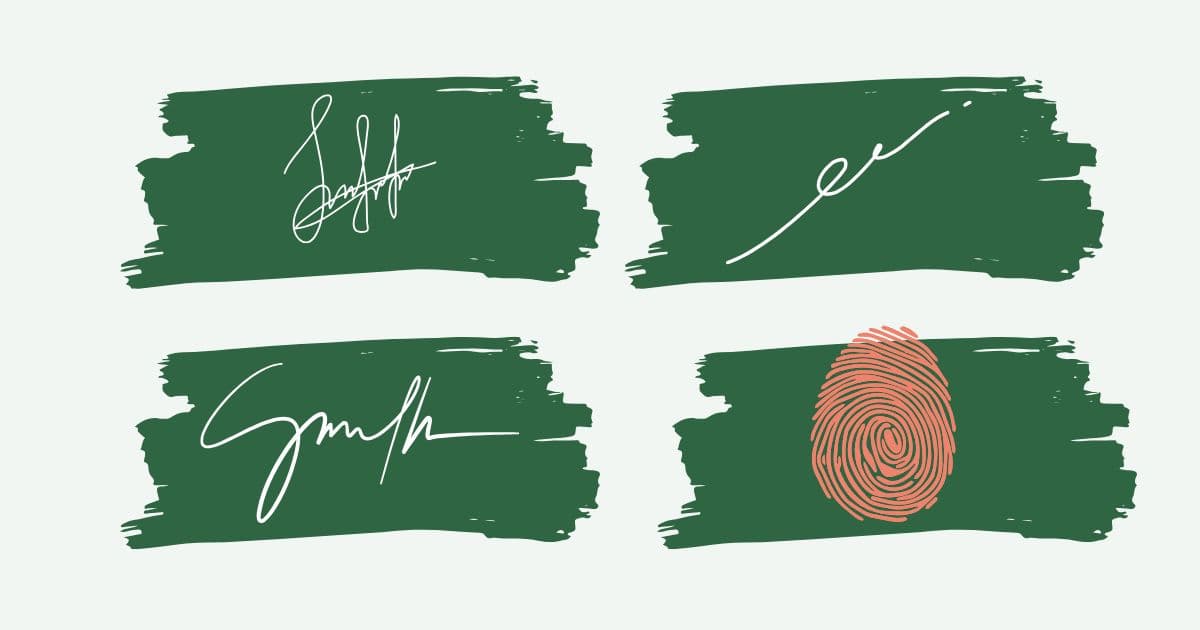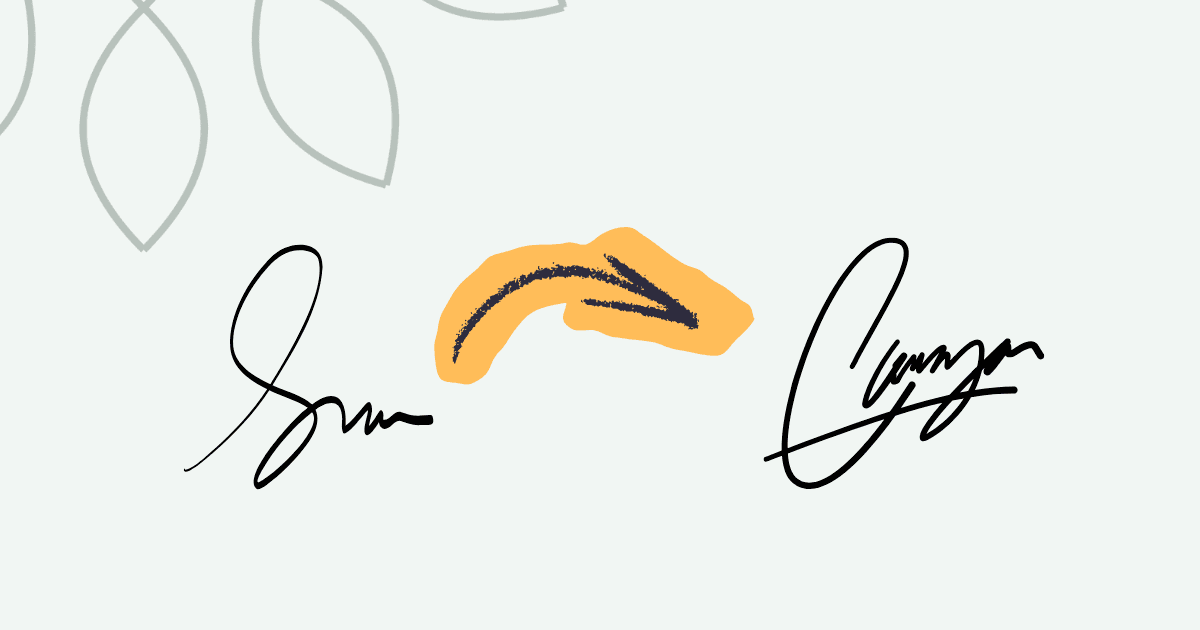
Yes — you can change your signature. Anytime. As an adult, as a minor, after a name change, or simply because you've hated the one you've been using since you were sixteen and thought a capital R with a dramatic loop was a good idea. There is no law in the United States that requires you to maintain a consistent signature throughout your life. Your signature is yours to change whenever you want.
That said, "can you change it" and "should you change it, and how" are different questions. There are practical considerations — accounts, legal documents, official IDs — that make a signature change more than just a decision you make on a Tuesday afternoon. This guide walks through all of it.
Can You Legally Change Your Signature?
The short answer is yes, and it doesn't require any legal process, court filing, or official approval. You can change your signature today, start using the new one tomorrow, and that's that. No forms. No government office. No lawyer.
This surprises a lot of people, partly because signatures feel so official and permanent. We use them on contracts, tax returns, legal documents, and identification. The assumption is that something so tied to your legal identity must be fixed and immutable. It isn't.
Here's what the law actually says — or rather, what it doesn't say. There is no federal law in the United States mandating that your signature take any specific form, or that it remain consistent from one document to the next. The legal framework around signatures focuses entirely on intent — did you mean to sign? — not on what your signature looks like or whether it matches a previous version of itself.
This principle runs all the way through how courts evaluate disputed signatures. Handwriting analysts look for consistency within a sample, but they're analyzing whether a signature was forged — not whether it matches how you signed something five years ago. The legal question is always: did this person intend to authenticate this document? The form of the signature is secondary.
The practical implication: your old signature and your new signature can look completely different, and documents signed with each are equally valid. A lease you signed in 2019 with your old cursive signature doesn't become invalid because you switched to a block-letter signature in 2024. Each signature was valid at the time it was made, and it stays that way.
What this also means — and we'll come back to this — is that there's no single "official" signature on file anywhere that all your other signatures have to match. Banks, government agencies, and employers may keep a signature on record, but that's for verification purposes, not because there's a legal definition of your "correct" signature that you're bound to forever.
There's No Law That Locks You In — Here's What That Means
The freedom to change your signature whenever you want flows from a simple legal reality: in the United States, a signature is a legal concept, not a handwriting standard.
Legally, your signature is any mark, symbol, or action you make with the intent to authenticate a document or indicate your agreement. That's it. The Uniform Commercial Code, which governs commercial transactions across the US, defines a signature broadly as including any symbol executed or adopted with present intention to adopt or accept a writing. The emphasis is on intention, not form.
This flexibility is what allows electronic signatures — a typed name, a drawn mark on a touchscreen, a click of a button — to carry the same legal weight as a handwritten signature. Our complete guide to electronic signatures goes deep on how this works and why it matters. But the same principle applies to handwritten signatures: what makes a signature valid is the intent behind it, not its appearance.
So what does it mean practically that there's no law locking you in?
It means you can have multiple versions of your signature at the same time. You might sign checks one way, type your name at the bottom of emails another way, and draw something entirely different on a touchscreen. All of them are valid signatures for their respective purposes.
It means consistency isn't legally required. If a bank teller holds two checks with noticeably different signatures and asks whether you signed both, the answer "yes, my signature changed" is a perfectly valid explanation. Inconsistency isn't fraud. Only intentional misrepresentation of someone else's signature is fraud.
It means you don't have to justify your decision to change. You don't owe anyone an explanation for why you're switching signatures. You just start signing differently, update the places that matter (your bank's signature card, your ID), and move forward.
There is one nuance worth understanding: if you sign a document with a dramatically different signature than what an institution has on file — particularly in a high-value or high-stakes situation — someone may ask whether it's really you. That's not a legal challenge to your signature; it's an identity verification question. The solution is to update your signature on file before the change, not after.
When Is the Right Time to Change Your Signature?
People change their signatures for all kinds of reasons. Some are practical, some are personal, some are both. Here are the most common triggers — and how to think about each.
You Got Married or Divorced
Name changes are the single most common reason people change their signatures. When you get married, you might take your spouse's last name, hyphenate, or blend names. When you divorce, you might return to a previous name. A signature that incorporated your old name naturally evolves to reflect the new one. In these cases, a signature change isn't really optional — it follows from the name change itself.
The administrative process of a name change involves updating your Social Security card, driver's license, and passport, which we'll cover in detail later. The signature change happens alongside those updates.
You've Been Using a Childhood Signature
A surprising number of adults are still using signatures they developed in their early teens, when their concept of "a good signature" was shaped by whatever looked cool at the time. The loops, the dramatic capitals, the signature that somehow turned into a logo — these often don't age well. As an adult, you can simply decide you want something different. Many people find their signature matures naturally into something simpler and more consistent as they get older. You can also deliberately accelerate that change.
You Want Something More Secure
Highly legible signatures — ones where you can clearly read your first and last name — are easier to forge than stylized, abstract ones. If security is a concern (you're signing high-value documents or checks regularly), switching to a more complex or stylized signature is a legitimate reason to change. A signature that's hard to replicate offers more protection than one anyone could copy after seeing it once.
You're Unhappy With Your Current One
This is reason enough. You don't need a life event to justify changing your signature. If you've always found yours unsatisfying — it feels sloppy, it doesn't look like you, it's inconsistent because you never really settled on one — changing it is perfectly valid. Many people discover that once they consciously design a signature they like and practice it consistently, signing things becomes a small daily act of self-expression rather than an afterthought.
You're Moving Into a More Formal Context
Starting a new job, entering a professional field, or beginning to sign more significant documents — contracts, legal papers, real estate transactions — can prompt a desire for a more polished, deliberate signature. That's a reasonable response to a change in the weight of what you're signing.
How to Choose a New Signature You'll Actually Stick With
The biggest mistake people make when changing their signature is choosing something they love in theory but can't reproduce consistently under pressure. You're going to sign this thing thousands of times, often quickly, in awkward positions (countertops, car hoods, clipboards at weird angles). It has to be something you can produce reliably, not something you can only replicate when you're sitting carefully at a desk.
Decide on Your Starting Point
Do you want your signature to be legible or stylized? To use your full name, first name only, initials, or something abstract? There's no right answer — as we cover in our post on whether your signature has to be your name, it doesn't. It just has to be something you consistently use as your mark.
Most people's signatures fall somewhere on a spectrum from highly legible (you can read every letter) to highly stylized (it's distinctive but not readable). Legible signatures are easier to verify; stylized ones are harder to forge. Neither is objectively better. Choose based on your priorities.
Use Elements That Are Natural for Your Hand
Your handwriting has natural rhythms — letters you form easily, connections that flow without effort. A signature that works against those rhythms will always feel forced and will look inconsistent. Pay attention to how your hand naturally forms the first letter of your name, and build from there. Many people find their best signature starts with a single strong motion and flows from it.
Keep It Producible Under Any Conditions
Test your candidate signature under realistic conditions: signing quickly, signing on an angled surface, signing with a cheap pen, signing on a touchscreen with your finger. If it degrades significantly under any of those conditions, it's too complex. Simplify until you have something that holds up in every scenario.
Practice Until It's Automatic
A new signature isn't really yours until you can produce it without thinking. That takes repetition — write it hundreds of times on scratch paper before you commit to using it on anything that matters. Sign your name across entire pages. Practice starting from different hand positions. The goal is for the muscle memory to be solid enough that the signature comes out consistently whether you're calm and focused or rushing to sign a receipt at a busy checkout counter.
How to Change Your Signature: A Step-by-Step Process
Once you've decided on your new signature and practiced it to the point of consistency, the actual process of changing is straightforward. Here's how to do it cleanly.
Step 1: Commit to a Date
Pick a date when you'll start exclusively using the new signature. This isn't a legal requirement — it's just good practice. Having a clean start date means you're not mixing old and new signatures across simultaneous transactions, which can cause unnecessary confusion if anyone is comparing signatures.
Step 2: Update High-Priority Accounts First
Your bank is the most important. Contact your bank and request a signature card update — either in person at a branch or through whatever process your bank offers. Some banks allow this online or via their app; others require a branch visit. Bring your ID. Once your bank has your new signature on file, future checks and signed bank documents will be compared against the updated version.
Step 3: Update Your Government-Issued ID on Your Next Renewal
Driver's licenses and state IDs in the US typically capture your signature when issued or renewed. You don't need to rush to change it — it updates automatically at your next renewal. However, if your name has also changed (due to marriage or divorce), you'll need to go to the DMV sooner to update the name, at which point the signature usually updates too.
Your US passport signature is captured at the time of application or renewal. Passports are valid for 10 years (5 years for minors), so your passport signature may lag behind your current signature for a while — that's normal and not a legal problem.
Step 4: Update Employer Records
If your employer keeps a signature on file for HR documents, payroll, or other purposes, let HR know about the change and provide an updated signature. This isn't mandatory in most contexts, but it prevents confusion if someone needs to verify your signature on an older document.
Step 5: Use the New Signature Consistently Going Forward
The most important step. Once you've made the switch, use the new signature everywhere, every time. Consistency — even a new, recently adopted consistency — is what establishes the new signature as yours. Over time, your new signature will appear on enough documents that it becomes unambiguously yours, and your old signature will fade into the background.
Do You Need to Notify Anyone When You Change Your Signature?
Strictly speaking: no. There is no legal obligation to notify anyone when you change your signature. You can simply start signing differently and move on with your life.
Practically speaking: a few institutions are worth proactively notifying, and a few aren't.
Your Bank: Yes, Proactively
Banks compare signatures on checks and other documents against the signature they have on file. If you submit a check signed with your new signature and the bank has only your old one on file, they may flag it — especially if the signatures look very different. A brief visit or call to update your signature card takes five minutes and eliminates that potential friction.
Your Employer: Only If They Keep Signatures on File
Most employers don't actively compare your current signatures against a master file. But if your employer regularly processes documents with your signature — expense reports, HR forms, checks — letting HR know you've updated your signature is a small courtesy that prevents anyone from questioning a document later.
Government Agencies: Generally No, Unless There's a Name Change
The Social Security Administration, the IRS, and other federal agencies don't maintain a "current signature" database that they actively check your submissions against. Consistency isn't required across different tax returns filed years apart. If you've also changed your name, the SSA does need to be notified — but that's about the name, not the signature specifically.
Legal Counterparties: No
You don't need to notify people you've previously signed contracts with that your signature has changed. Those documents remain valid. Their signatures on future documents will simply look different, which is completely normal and legally unremarkable.
Updating Your Signature on Official Documents and Accounts
Here's a practical checklist of where your signature appears and what updating it actually involves.
Bank Accounts and Credit Cards
Visit your bank branch with a government-issued photo ID and request a signature card update. For credit card accounts, your signature may be captured on the back of your physical card — simply sign the new card when it arrives at renewal. Some financial institutions allow signature updates through their mobile apps or online banking portals, though most still require in-person verification for the initial update.
Driver's License and State ID
Your signature is captured at the time of issuance or renewal. In most states, you can't update just your signature mid-cycle — it updates at renewal. If you also have a name change to make, go to the DMV with your legal name change documentation (marriage certificate, court order) and the signature will be captured fresh at that visit.
US Passport
Your passport signature is on the photo page and doesn't change until you renew. Passports can't be updated mid-cycle for signature changes alone. At renewal, your new signature is captured. If your name has changed, you'll need to apply for a new passport regardless of when your current one expires, and the new signature will be captured at that time.
Tax Returns
The IRS doesn't keep a master signature on file to compare against each year's return. You simply sign your return with your current signature. If the signature looks different from a prior return, that's not a red flag — the IRS is looking at the return's content, not handwriting consistency. For electronically filed returns, you use a PIN or other electronic authentication method, so handwritten signature consistency isn't relevant at all.
Legal Documents and Contracts
Existing contracts don't need to be updated when your signature changes. Going forward, you'll sign new documents with your new signature. If a counterparty ever compares your current signature on a new document to your old signature on a previous one and raises a question, the explanation is simple: "My signature changed." No further justification is required.
What Happens to Old Documents After You Change Your Signature?
This is the question that makes people most nervous about changing their signature, and the answer is genuinely reassuring: nothing happens to old documents. They remain completely valid.
A contract you signed in 2018 with your old signature is just as enforceable in 2026 as it was the day you signed it. Your signature — the old one — was valid at the time you made it. The fact that you now sign differently doesn't retroactively invalidate anything.
Think about it this way: your handwriting has probably changed somewhat throughout your adult life. A document you signed at 22 might look different from the same signature at 42, even if you never consciously changed anything. Courts understand that handwriting evolves. That's why forensic document examiners look at multiple samples from the relevant time period when analyzing a disputed signature, not just a single reference point from decades later.
The situation where this comes up most often in practice is when someone challenges whether they signed a particular document. If they're claiming they didn't sign it, and the signature on the document matches their old style rather than their current one, that's actually evidence in your favor — it shows they signed before the change, consistent with the document's date. An old signature is not a liability.
What does change is the verification process going forward. If an institution with your old signature on file receives a document signed with your new signature, they may request additional verification — a photo ID, a confirmation call, a branch visit. That's a reasonable identity-verification step, not a legal problem. The solution is to update your signature on file before you need something verified, not after.
One important exception: don't try to retroactively re-sign old documents with your new signature to make them "match." A document is a historical record. Its signature should reflect the signature you were using at the time it was executed. Altering a signed document — even your own — after the fact can create legal problems that didn't exist before.
Changing Your Signature After a Name Change
A legal name change — through marriage, divorce, or a court order — is the most common trigger for a meaningful signature change, and it's also the context where the administrative work is most significant. Here's how to approach it.
Marriage
When you get married and take a new last name (or hyphenate, or otherwise change your name), you'll need to update your name across government records, financial institutions, and other accounts. The process typically starts with obtaining a certified copy of your marriage certificate, then updating your Social Security card first (the SSA is the foundation that other agencies rely on), followed by your driver's license or state ID, then your passport if you have one.
Your signature naturally evolves through this process. When you sign for a new SSA card and then update your driver's license, your signature is captured fresh at each step. There's no need to separately "change your signature" — the name change process does it organically.
Many people find that a name change is the perfect opportunity to design a deliberate new signature rather than just adapting the old one. If your old signature incorporated a legible first and last name, and the last name is changing, you're effectively redesigning the signature anyway. Use that moment intentionally.
Divorce and Reverting to a Previous Name
Returning to a prior last name after divorce follows a similar administrative path. A court order or divorce decree serves as the legal documentation of the name change. You update the SSA first, then driver's license, then other accounts.
The signature question here is a bit different: you're returning to a name you've signed before, but your signature style may have evolved significantly since then. Don't feel obligated to revert to your old signature. Design something you want to use now — one that works with the returned name — and build from there.
Court-Ordered Name Changes
Legal name changes for other reasons (transition-related name changes, personal preference, other circumstances) follow a similar process. The court order is the foundational document, and the update sequence — SSA, then ID, then financial institutions — is the same.
The Social Security Administration provides clear guidance on the documentation required for name change updates in each circumstance. Starting there first, before updating anything else, ensures the rest of the process goes smoothly.
What About Your Signature During the Transition?
The period between getting legally married and finishing all your name updates can last weeks or months. During that time, you may have some documents issued in your old name and some in your new name. Your signature may be in transition too.
That's fine. Use whichever version of your signature corresponds to the name on the account or document you're signing. Your bank account may still be in your old name — sign with your old-name signature there until the account is updated. Your new driver's license uses your new name — sign with the new signature there. Keeping track of where you are in the update process prevents the confusion of signing a bank check with a new-name signature when the account is still registered under the old one.
People Also Ask
Is it okay to just change your signature?
Yes, completely. There's no legal process required and no one you need to notify before you start. You can simply decide on a new signature, practice it until it's consistent, and begin using it. The only practical steps worth taking are updating your bank's signature card and your ID at the next renewal, so institutions have your current signature on file for verification purposes.
Does your signature have to match your legal name?
No. A signature does not have to resemble, contain, or correspond to your legal name in any way. Legally, a signature is any mark made with the intent to authenticate a document — it can be a stylized scrawl, a set of initials, a symbol, or anything else you consistently use as your mark. That said, for government IDs and some formal legal contexts, your name appears separately and is the reference for your legal identity, while your signature is a separate element that doesn't need to match it.
Conclusion
Changing your signature is simpler than most people assume. There's no law requiring you to keep the same one, no court to petition, and no approval to seek. You decide, you practice, you start signing differently — and the old one stays valid on every document you've ever signed with it.
The practical work comes afterward: updating your bank, letting your ID catch up at renewal, and being consistent enough with the new signature that it becomes unambiguously yours over time. That process takes a little patience, but it's not complicated.
If you're curious about other signature fundamentals — whether your signature has to be your name, what makes a signature legally valid, or how electronic signatures work — there's more to explore on the Dochives blog. And when it comes time to sign your next document digitally, try Dochives free and see how fast and clean the process can be.