Can Your Signature Be Anything?
Yes — your signature can be almost anything. Initials, a stylized monogram, a quick scribble, an X, even a drawn symbol that looks nothing like your name. As long as you make the mark with the intention of signing, the law treats it as a valid signature.
That answer surprises most people. We grow up assuming a signature has to be your name, written in cursive, applied with serious ceremony. We see signature lines in school workbooks, watch parents sign permission slips with careful flourishes, and somewhere along the way absorb the idea that there are strict rules about what a signature has to look like. There aren't. Or at least, there are far fewer rules than the cultural mythology around signatures suggests.
The legal definition of a signature is remarkably loose. Under U.S. commercial law, a signature is "any symbol executed or adopted with present intention to adopt or accept a writing." That's it. Any symbol. The law cares about intent, not aesthetics. If you draw a smiley face on a contract intending it to be your signature, you've signed the contract. The smiley face will probably raise eyebrows if a dispute ever lands in court, but the legal validity isn't in question.
This flexibility isn't an accident or a loophole. It reflects centuries of practical necessity. Most people throughout history were illiterate. They couldn't write their names even if they wanted to. So the law evolved to recognize any deliberate mark — an X, a thumbprint, a personal symbol — as a valid signature, provided it was made with the intent to be bound. That principle survives today, even as most of us are perfectly capable of writing our own names.
In this guide we'll walk through what the law actually requires, where the real limits are, and how to choose a signature that works for you. We'll cover initials specifically (a major source of confusion), the relationship between signing initials and full signatures, and the relatively narrow situations where signature form actually does matter. By the end, you'll know exactly what your signature can — and can't — be.
What the Law Actually Requires
A signature is one of the most flexible legal concepts you'll encounter. To understand why your signature can essentially be anything, you need to understand what the law actually defines as a signature in the first place. The definition is broad on purpose.
The Uniform Commercial Code (UCC), which governs commercial transactions in every U.S. state except Louisiana, defines a signature as "any symbol executed or adopted with present intention to adopt or accept a writing." Read it again, slowly. Any symbol. Not "your full name." Not "a consistent mark that matches your driver's license." Not "letters arranged in a recognizable way." Any symbol you make with the intention of signing.
The Electronic Signatures in Global and National Commerce Act (ESIGN Act) takes the same approach for electronic transactions. It defines an electronic signature as "an electronic sound, symbol, or process, attached to or logically associated with a contract or other record and executed or adopted by a person with the intent to sign the record." Once again, the focus is squarely on intent.
The Uniform Electronic Transactions Act (UETA), which has been adopted by 49 of 50 states, mirrors that same standard. The signature is valid if the signer intended it to be a signature. Period.
So what does the law really require? Two things, and only two things:
1. A mark. Some kind of identifiable symbol — letters, initials, a drawn shape, an X, a typed word, a clicked button. The mark itself doesn't have to look like your name or even contain letters. It just has to exist as a discrete, intentional gesture.
2. The intent to sign. You have to mean it as a signature. The mark has to be made with the conscious intention of authenticating the document or agreeing to its terms. A doodle in the margin isn't a signature. A scribble made on the signature line of a contract you're voluntarily executing absolutely is.
That's the entire legal framework. Two requirements. Everything else — the form, the style, the legibility, the consistency with your ID — is a matter of practical convenience and verification, not legal validity.
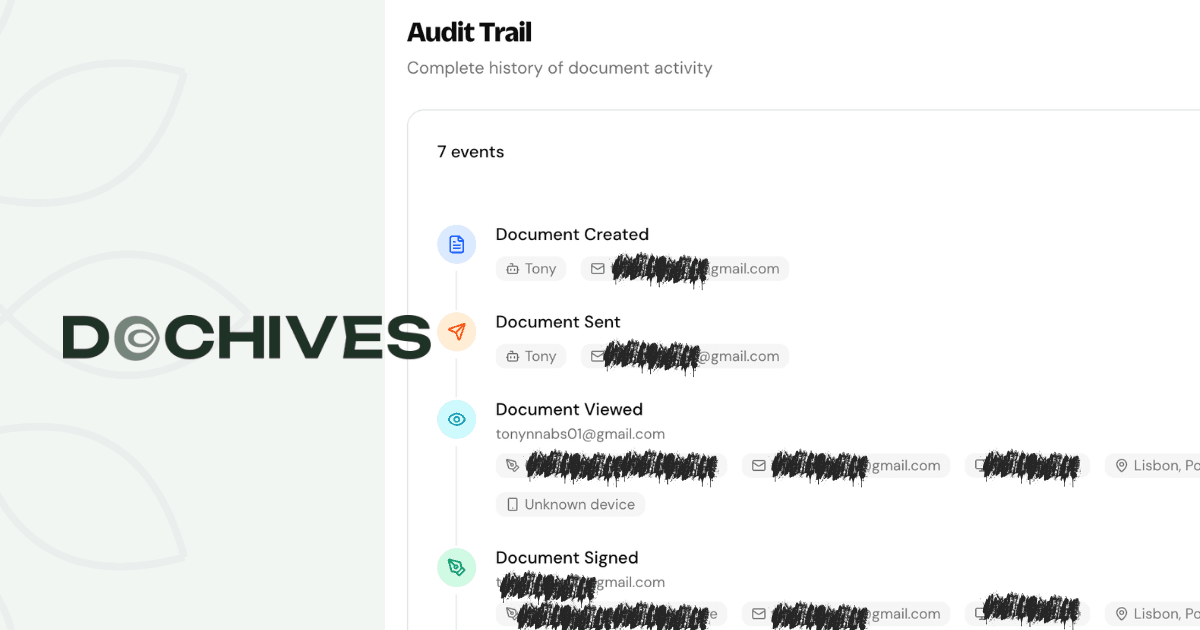
Where the law gets stricter is around evidence. A scribble on a paper contract gives you the mark and not much else. An electronic signature made through a reputable signing platform gives you the mark plus a comprehensive audit trail — timestamps, IP addresses, browser information, authentication records. The signature itself is just as valid in both cases. But the supporting evidence makes the electronic version far more defensible if anyone ever challenges whether the signing actually happened.
Courts have applied this principle consistently for centuries. In the 1899 case Trevor v. Wood, the New York Court of Appeals upheld signatures sent by telegraph as valid, reasoning that the form of the mark didn't matter as long as the signer intended it to bind them. A century later, courts apply the same logic to clicked buttons and typed names. The principle hasn't changed: intent over form, every time.
One important nuance worth flagging: while the law is broad about what counts as a signature, it cares deeply about whether you actually intended to sign. Disputes about signature validity almost always center on intent, not on what the mark looked like. Did the person know they were signing? Did they understand what they were agreeing to? Were they coerced? Were they competent? Those are the questions courts examine. The shape of the squiggle on the page is rarely the issue.
Can Your Signature Be Your Initials?
Yes. Your signature can absolutely be your initials. This is one of the most common alternatives to a full-name signature, and it's accepted in essentially every jurisdiction, on essentially every type of document.
Initials work as signatures for the same reason any mark works as a signature: when you write your initials on a signature line, you're making a deliberate, intentional act. Nobody accidentally writes "JR" at the bottom of a contract. The act itself communicates intent, which is what the law cares about.
Initials show up as primary signatures in lots of contexts. People with long names often default to initials simply because they're faster. Executives who sign dozens of documents a day frequently use initials or a stylized initial-based mark. Some people develop a hybrid style — first initial flowing into a partial last name — that's recognizably theirs but not a full spelled-out signature. All of these are valid.
There's a related question that comes up constantly: can initials replace a full signature on a contract? The answer is almost always yes. Unless the contract specifically requires a full signature in a particular form (which is rare), initials applied with intent to sign are legally equivalent to a written-out name. Some institutions — particularly banks and notaries — may have their own internal preferences, but those are policies, not legal requirements.
Here's where initials get particularly interesting. They serve double duty in the document-signing world. Sometimes they function as full signatures. Other times, they're used to acknowledge specific pages or clauses within a longer document that's also signed in full at the end. The same mark — your initials — can play either role depending on the context.
A few examples of how initials are commonly used as full signatures:
Internal business documents — Expense approvals, time sheets, internal memos, change orders. Speed matters more than ceremony, and initials get the job done.
Medical consent forms — Patients often initial each listed procedure, with each set of initials carrying full signature weight for that specific item.
Real estate documents — Agents and clients routinely initial individual disclosures, addenda, and short forms.
Routine contract amendments — When parties to an existing contract are agreeing to a small change, initials on the amendment are typically sufficient.
The legal precedent for initials-as-signatures is extensive. Courts have consistently upheld initialed signatures across every major U.S. jurisdiction. The case law treats them as functionally equivalent to full signatures, focusing — as always — on the question of intent rather than the form of the mark.
One practical note: if you use initials as your primary signature, try to be reasonably consistent. Use the same initials each time (first and last, or first, middle, and last, depending on your preference). This isn't a legal requirement — it's just helpful for verification purposes if someone ever needs to compare your signatures across documents. Banks and notaries appreciate consistency, even though they can't legally reject signatures that vary.
Signing Initials vs. a Full Signature: When to Use Each
Initials and full signatures often appear on the same document, doing different jobs. Understanding the relationship between signature and initials helps you handle longer contracts and multi-page documents correctly.
The basic pattern works like this: full signatures appear at the end of a document, on a designated signature line, where you're committing to the entire agreement. Initials appear throughout the document, at the bottom of each page or next to specific clauses, where you're acknowledging that you've read or specifically agreed to that section.
This isn't about one being more legally binding than the other. Both are valid signatures. They serve different evidentiary purposes.
Why initials throughout? When you initial each page of a long contract, you're creating evidence that you reviewed every page. This makes it much harder to later claim you didn't notice a particular clause. Real estate transactions are the most familiar example — buyers and sellers initial dozens of pages of disclosures, addenda, and the main purchase agreement before signing the final pages in full.
Why a full signature at the end? The full signature is the formal commitment to the whole document. It's traditionally more elaborate and harder to fake than initials, which is why it gets reserved for the most consequential moment of the signing process.
Here's how this plays out in different settings:
Real estate transactions. You'll initial almost every page of every document. The lead disclosure, the seller's disclosure, the lead-based paint disclosure, the inspection contingency, the mortgage commitment letter — all initialed page by page. Then you sign the final signature page in full. The initials prove you saw each page. The signature commits you to the whole agreement.
Multi-page commercial contracts. Same general pattern. Initial each page (or at least each substantive page), sign the last page in full. Some contracts add specific initial blocks next to particularly important clauses — limitation of liability, indemnification, dispute resolution — to create extra evidence that those clauses received the signer's attention.
Medical documents. Patients often initial next to each listed treatment or procedure on a consent form. Each set of initials acts as a discrete signature for that specific item. The bottom of the form usually has a full signature line confirming overall consent.
Loan documents. Mortgages and other complex financial agreements typically combine page-by-page initials with section-specific initials and a final signature. Lenders use this layered approach to make it hard for borrowers to later claim they didn't understand specific terms.
Internal corporate documents. Often only require initials throughout, with no full signature at all. The repetition of initials across pages is enough.
When can you use initials instead of a full signature on the main signature line? In almost every case, yes. Unless the document specifically requires a full signature (rare in practice), initials applied with intent on the signature line are legally equivalent. That said, for high-stakes documents, a full signature carries more cultural weight and tends to raise fewer questions during downstream verification.
Here's a useful mental model: think of full signatures as the "I commit to the whole thing" signal, and initials as the "I acknowledge this part" signal. Both are valid signatures. Both are binding. They just operate at different scopes within the document.
One more nuance: some signing platforms make it easy to apply initials in bulk, which is helpful for long documents. The platform places initial blocks on every page automatically, and you confirm them with one or two clicks. This combines the evidentiary value of page-by-page initials with the efficiency of digital signing.
What Counts as a Signature? (Beyond Letters)
We've established that signatures don't need to be your full name. Initials work. But the flexibility goes well beyond letters and initials. The category of "valid signature" is much broader than most people realize.
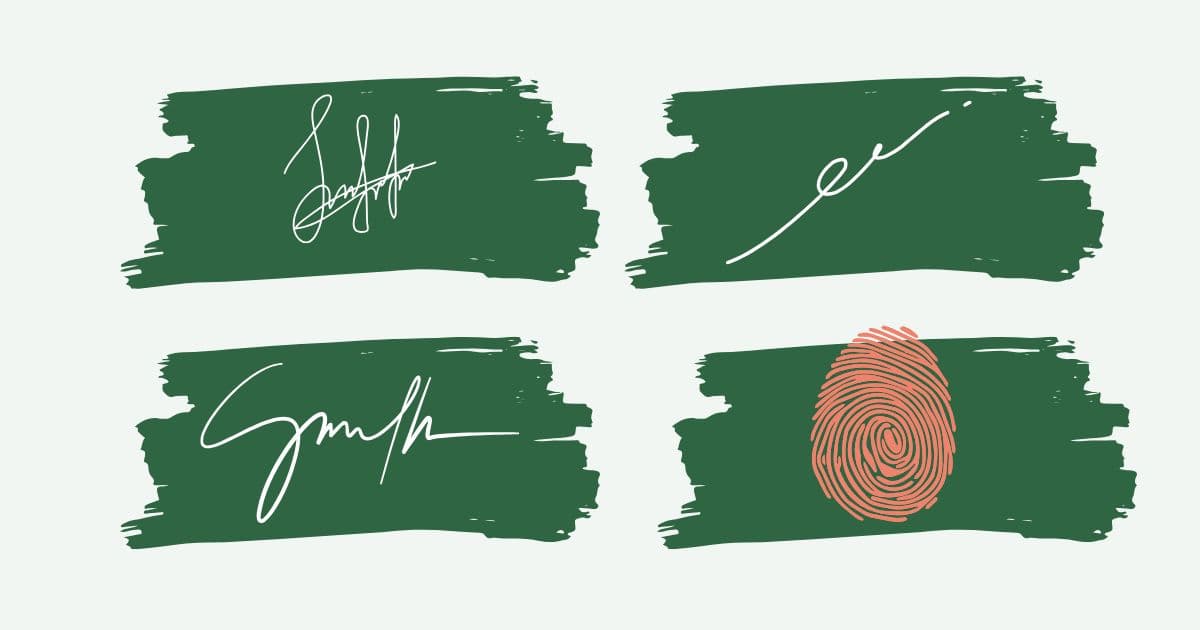
Here are the kinds of marks that have been recognized as valid signatures, in U.S. courts and elsewhere:
Drawn symbols. Some people sign with shapes — a star, a heart, a personal sigil. As long as the mark is applied with intent to sign, it's valid. Courts have upheld signatures consisting of drawn symbols in cases stretching back over a century.
The "X" mark. Historically used by people who couldn't write, an X applied to a signature line with intent is a fully valid signature. In most jurisdictions, an X used as a signature should ideally be witnessed, with the witness writing the signer's name next to it and noting "his/her mark." This adds evidentiary weight, but the X itself is the legally operative signature.
Stylized monograms. Many people develop personal monograms — interlocking initials, decorative letterforms — that they use as signatures. Royalty has been doing this for centuries. The monogram doesn't have to spell out your name in any conventional sense. As long as it's the mark you've adopted as your signature, it works.
Thumbprints. In some jurisdictions and contexts, particularly where the signer cannot write, a thumbprint applied to a document serves as a valid signature. This is more common internationally than in the U.S., but U.S. courts have recognized thumbprint signatures in specific contexts.
Stamps and seals. Corporate seals and stamped facsimile signatures have long been recognized as valid signatures for organizational documents. Many businesses use signature stamps for routine high-volume signing — payroll checks, internal authorizations — and these carry the same legal weight as handwritten signatures.
Typed names. In electronic contexts, a typed name in a signature field is a fully valid signature under the ESIGN Act and UETA. No drawing required, no special font needed, no flourishes. Just your name typed into the right place with the intent to sign.
Clicked buttons. When you click "I Agree" on a software license, terms of service, or online contract, that click constitutes an electronic signature. The combination of the click, the context (presented as a signing action), and your knowledge of what you're agreeing to satisfies the legal definition.
Drawn signatures on touchscreens. Tablets and smartphones now make it easy to draw a signature with your finger or stylus. The resulting drawing usually looks rougher than a pen-and-ink signature — that's fine. The legal validity comes from the intent and the audit trail, not the aesthetic quality.
A few historical examples make this point vividly. Medieval European nobles routinely signed documents with personal seals — wax impressions made with signet rings — rather than handwritten signatures. The seal was considered more secure than a handwritten signature because it was harder to forge. You needed the actual ring. The same logic underpins modern cryptographic signatures, where verification depends on cryptographic proof rather than the visual appearance of a mark.
Look at celebrity autographs. Most are completely illegible. Some are just a swoopy line. Others are an elaborate symbol that bears zero resemblance to the person's actual name. We accept these as authentic because we understand that the signature represents the person's identity, regardless of what it looks like. The same logic applies to legal signatures. The form is irrelevant. The intent is everything.
For a deeper exploration of why your signature doesn't need to look like your name, see our guide on whether your signature has to be your name.
What Are the Limits? When a Signature Won't Hold Up
We've spent most of this article emphasizing how flexible signature law is. That's accurate, but it's also worth being honest about the situations where signatures can be challenged or invalidated. The flexibility isn't unlimited.
Here are the real limits on what your signature can be:
Forgery. If someone else made the mark — even if it's a perfect replica of your usual signature — it's not a valid signature on your behalf. Forged signatures don't bind the supposed signer because the essential element (your intent to sign) is absent. This is criminal in most jurisdictions, and signatures proven to be forged carry no legal weight.
Coercion. If you signed under threat or duress, the signature can be invalidated. The mark exists, but the legal element of free intent is missing. Courts will set aside contracts where one party can demonstrate they signed because of physical threats, blackmail, or other coercive pressure.
Lack of capacity. Signatures by people who lack legal capacity to contract — minors (in most contexts), individuals with severe cognitive impairment, people heavily intoxicated at the time of signing — can be challenged. The flexibility of what form a signature can take doesn't override the requirement that the signer be legally capable of signing.
Documents excluded from electronic signing. Both the ESIGN Act and UETA carve out specific document types where electronic signatures aren't valid. These include:
- Wills, codicils, and testamentary trusts (which have their own state-specific formality requirements)
- Adoption and divorce documents
- Court orders and certain court-filed documents
- Notices of cancellation of utility services
- Notices of cancellation of health or life insurance benefits
- Documents related to product recalls affecting health or safety
For these document types, traditional ink signatures (or other specifically required forms) remain necessary. The general flexibility of signature law doesn't override these statutory exclusions.
Highly informal contexts. A signature scribbled on a napkin during dinner conversation might be technically valid but practically very hard to enforce. The mark exists, the intent might have been there, but proving that the parties intended a binding agreement — versus a casual joke or a brainstorming sketch — becomes difficult. Courts look at context, and the more informal the setting, the more skeptical the analysis becomes.
Ambiguous electronic interactions. A reply to an email that says "sounds good" might or might not constitute a binding signature, depending on the context. Courts have gone both ways on these cases. The general principle: the more clearly the parties signaled they were treating the exchange as a contractual signing, the more likely a court treats it as a valid signature.
Documents requiring witnesses or notarization. Some documents (real estate deeds, certain affidavits, wills in many states) require witnesses or notarization in addition to the signature. A signature without the required witnesses isn't necessarily invalid, but the document as a whole may be unenforceable until those formalities are met.
Specific industry or regulatory requirements. The FDA's 21 CFR Part 11 sets specific technical requirements for electronic signatures in pharmaceutical contexts. HIPAA imposes safeguards for healthcare-related signatures. Government contracting often has its own specific requirements. In these regulated contexts, even a legally valid signature might fail to meet specific industry mandates.
The pattern in all these limits: it's almost never the form of the signature that's the problem. The mark itself is rarely what gets challenged. What gets challenged is the surrounding context — was there real intent, was the signer competent, did the document type allow for the signature method used, were the required formalities followed?
That's the practical takeaway. Your signature can be almost anything in form. But "almost anything" isn't the same as "anything in any context." Knowing where the boundaries actually sit helps you avoid the relatively narrow situations where signature questions become real legal problems.
Can Your Signature Change Over Time?
Yes, and most people's signatures do change over time. Naturally, gradually, sometimes dramatically. This is completely normal and doesn't affect the legal validity of any of your past or future signatures.
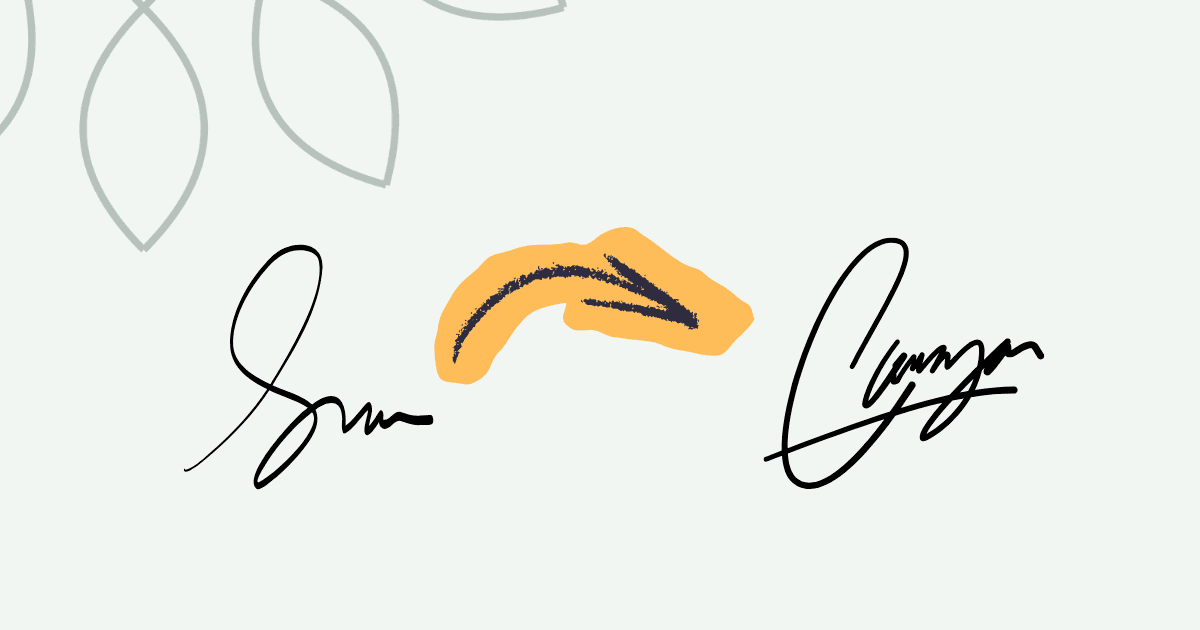
People's signatures evolve for all sorts of reasons. Hand strength changes with age. Writing habits shift. You sign so many things that your signature simplifies into a quick mark for efficiency. You consciously redesign it because you got tired of the old one. You started with a careful cursive version of your name and ended up with a stylish squiggle ten years later. All normal. All legally fine.
Each of these signatures — past, present, future — is a valid signature for the document it was applied to. The fact that your 2020 signature looks different from your 2026 signature doesn't somehow invalidate either one. The legal requirement is intent at the moment of signing. As long as you intended to sign at the time you applied the mark, the signature is valid, regardless of what your signature looked like five years before or after.
This trips up some people, especially when they're confronted with old documents. They look at a signed contract from years ago and barely recognize their own handwriting. That's fine. The signature was valid when it was made. Time doesn't retroactively change that.
Where signature evolution can cause practical friction:
Banks and check verification. Banks compare current signatures against the signature card you provided when you opened the account. If your signature has changed dramatically, you might run into delays or additional verification requests for large checks or unusual transactions. The remedy is simple — visit a branch and update your signature card. Many banks now allow this through their mobile apps.
Notaries. Notaries compare the signature on the document being notarized against the signature on your government-issued ID. If they're significantly different, the notary might ask additional verification questions. Most notaries understand that signatures change over time and will work with you, but a dramatic mismatch can slow things down.
Identity verification systems. Some automated identity verification systems include signature comparison as one of several factors. If your signature has evolved, the system might flag the mismatch for human review. This is more inconvenience than legal problem.
Disputed documents. If a signature is ever challenged in court — usually in cases of alleged forgery — handwriting experts may compare the disputed signature to known examples of your signatures from around the same time period. They understand that signatures evolve, and they look at examples from the right era rather than expecting consistency across decades.
So can you redesign your signature? Absolutely. Lots of people do, sometimes multiple times throughout their lives. Some practical tips if you're consciously changing your signature:
Settle on the new design before you start using it. Practice it a few dozen times until it feels natural and consistent. The worst time to figure out exactly what your new signature looks like is in the middle of signing important documents.
Update your bank signature card after redesigning. This minimizes the chance of friction when you need to make large transactions or write significant checks.
Be aware that government IDs persist for years. Your driver's license might have a signature from when you first got it five years ago. That's fine — but be prepared for occasional notary or financial-institution conversations about the difference.
Don't worry about old documents. Your previous signatures on old contracts, deeds, and other documents remain valid. You don't need to re-sign anything because your signature has changed.
The bottom line is that your signature is yours, and yours can evolve as you do. The law doesn't lock you into the signature you had when you turned 18.
How Electronic Signing Changed the Rules
Electronic signatures didn't just digitize an existing process — they expanded what counts as a signature in ways that further reinforce how flexible signature law actually is.
Before the ESIGN Act passed in 2000, there was real legal uncertainty about whether typed names, clicked buttons, or other electronic interactions could constitute binding signatures. Some courts had recognized electronic assent in early internet cases, but there was no consistent national framework. The ESIGN Act and the UETA (now adopted in 49 states) settled the question by establishing that electronic signatures carry the same legal weight as ink-on-paper signatures, as long as all parties consent to conducting business electronically.
Under these laws, the definition of a valid electronic signature is sweepingly broad. Each of the following qualifies:
- Typed names — Just your name in a signature field. No fancy cursive font required. The typing itself is the signature.
- Clicked buttons — "I Agree" buttons on terms of service pages, software license agreements, and online contracts.
- Drawn signatures on touchscreens — Drawing your signature with a finger or stylus on a tablet or phone.
- Email confirmations — In specific contexts, sending an email confirming agreement to terms can constitute a signature.
- Voice recordings — Yes, voice signatures are explicitly contemplated in the ESIGN Act's "sound, symbol, or process" language.
- Biometric inputs — Fingerprint scans and other biometric authentication methods can constitute electronic signatures.
What makes electronic signatures particularly powerful isn't the broad definition itself — it's the evidence infrastructure that surrounds them. A handwritten signature on a paper document gives you the mark and very little else. You might be able to compare handwriting, analyze ink, or find fingerprints, but that's about it.
An electronic signature comes with a comprehensive audit trail: the exact timestamp of signing, the signer's IP address, their browser and device information, how they were authenticated, and a cryptographic hash that proves the document hasn't been altered since signing. This evidence package makes electronic signatures, in many ways, more defensible than their paper counterparts.
There's an irony here. People often perceive handwritten signatures as more secure than electronic ones — they feel more "real," more permanent, more legally serious. The actual evidence usually points the other way. A typed name with a robust audit trail is far easier to defend in court than a hand-scrawled signature on paper, where the only evidence is the mark itself plus whatever witnesses or supporting documentation happen to exist.
This is why the form question — "what does my signature look like?" — matters even less in electronic contexts than it does on paper. The audit trail is doing most of the legal work. Whether you typed your name, drew a quick squiggle, or clicked a button is largely irrelevant to the legal validity of the signature, because the supporting evidence is so much richer.
For organizations that send and sign lots of documents, electronic signing platforms also handle a lot of the practical complexity around signature collection, multi-signer workflows, and document storage. The shift from paper to electronic isn't just about speed — it's about creating a more verifiable, more auditable, more legally defensible signing process. Our complete guide to electronic signatures covers the legal framework, types, security, and best practices in much more depth.
Best Practices for Choosing a Signature
We've covered the law, the flexibility, and the limits. Let's wrap up with practical advice on actually choosing a signature that works for you. Here's what tends to work best.
Pick something you can reproduce consistently. Consistency isn't a legal requirement, but it's the single most useful trait a signature can have. A signature you can produce the same way every time is easier to verify, less likely to raise flags at banks or notary offices, and harder for someone else to convincingly forge. If your signature is wildly different every time you make it, that's not a legal problem — but it can create practical headaches across your daily life.
Make it quick to write. You're going to sign your name thousands of times over the course of your life. An elaborate, multi-flourish signature might look impressive, but it's going to slow you down. The best signatures balance distinctiveness and efficiency. Most people end up with something that starts recognizably (often the first letter of their first or last name) and trails off into a smooth motion that's unique to them.
Consider how it translates digitally. More documents are signed electronically every year. If your signature relies on subtle pen pressure variations or ultra-fine lines, it may not translate well to a touchscreen or trackpad. A bolder, slightly larger signature tends to reproduce better across different digital signing platforms. If you sign mostly electronically, optimize for that environment.
Don't make it overly legible. Counterintuitive but important. A perfectly legible signature is easier to forge — anyone can copy something they can read. A more stylized, partially illegible signature is paradoxically more secure. The challenge is finding a balance: stylized enough to be hard to copy, but consistent enough that you can reproduce it reliably.
Don't include sensitive information. Some people incorporate their full date of birth, phone number, or other identifying details into their signature. Don't. These signatures end up on countless documents, many of which get scanned, photographed, and stored in places you can't control. Keep your signature to your name (or initials, or symbol) — leave personal data for the form fields where it belongs.
Practice it before committing. Once you settle on a signature design, write it out a couple dozen times on scratch paper. Get the muscle memory built up. Make sure the design is something you can produce naturally without having to think about each stroke. The goal is for your signature to flow without conscious effort.
Be aware of your context. A signature appropriate for daily commercial documents might be inappropriate for, say, a will or estate document where attorneys typically prefer a clearer, more deliberate signature to reduce the surface area for challenges. You can have a "default" signature for everyday use and a more careful version for high-stakes documents.
Don't agonize over it. Most importantly: don't overthink this. Your signature doesn't need to be a work of art. It doesn't need to win any contests. It doesn't need to impress anyone. It just needs to be something you can produce reasonably consistently with the intent to sign. Anything beyond that is decoration.
If you sign mostly electronically, the practical concerns shift slightly. Many e-signature platforms will generate a signature for you from your typed name — a stylized rendering in a script-like font. This works perfectly well legally, and it has the advantage of being consistent across documents. Or you can draw your own signature on a touchscreen, which most platforms will then save and reuse for future signings. Either approach is fine.
Whatever you choose, remember the core principle: your signature is a symbol of intent, not a piece of identification. The law doesn't care what it looks like. It cares whether you meant it.
People Also Ask
Can your signature be anything legally?
Yes, in most contexts. The law defines a signature as any symbol made with the intention of signing — that includes initials, drawn marks, an X, a stylized monogram, or even a smiley face if you intend it as your signature. The form doesn't determine validity; the intent does. The exceptions are narrow: certain document types (wills, court orders, family law matters) have specific formality requirements, and signatures obtained through forgery, coercion, or by people lacking legal capacity can be invalidated.
What is not allowed in a signature?
Very little is outright "not allowed" in terms of the form a signature can take. The real limits aren't about what the signature looks like — they're about how it was obtained and what kind of document it's on. A signature can be invalidated if it was forged, applied under coercion, or made by someone without legal capacity to contract. Certain document types (wills, divorce decrees, some court orders) require traditional ink signatures and may not accept electronic alternatives. Beyond these specific situations, almost any deliberate mark applied with intent qualifies as a valid signature.
Can anyone do anything with your signature?
If someone uses your signature without your authorization — copying it, tracing it, or applying it to a document you didn't agree to — that's forgery, which is a crime in every U.S. jurisdiction. A forged signature carries no legal weight against you, because the essential legal element (your intent to sign) is missing. The forger can be held criminally liable and you can dispute any document bearing the unauthorized signature. The practical risk is the time and effort required to challenge the document. To minimize that risk, avoid posting unredacted images of your signature publicly, be careful about who you give signed documents to, and use electronic signing platforms that generate audit trails to protect your authentic signatures.
Wrapping Up
Your signature can be almost anything. Initials, a scribble, a symbol, an X, a typed name, a drawn mark on a touchscreen — all valid, all legally binding, all enforceable. The law cares about your intent to sign, not the form your signature takes. That's been the principle for centuries, and electronic signing has only expanded the range of what counts as a valid signature.
The real limits sit at the edges. Forged or coerced signatures don't bind. Certain document types still require traditional ink signatures or witnesses. Highly informal contexts can make intent hard to prove. But for the vast majority of contracts, agreements, and everyday signing situations, you have enormous freedom in how your signature looks.
If you're choosing or redesigning a signature, focus on what works practically: something you can reproduce consistently, that's quick to write, that translates well to digital signing platforms, and that you don't have to think about. The aesthetics are entirely up to you.
For more on what the law actually requires for a valid signature, see our guide on whether your signature has to be your name. For the full picture on how electronic signatures work — their legal framework, types, and security — check out our complete guide to electronic signatures.
Ready to sign documents the easy way? Try Dochives free and send your first document for signature in minutes — no credit card required, full audit trails included, and your signature can be exactly what you want it to be.