Does Your Signature Have to Be Your Name?
Short answer — no. Your signature does not have to be your name. Not your full name, not your first name, not any version of your name at all.
That surprises a lot of people. We grow up watching adults scribble their names on checks, permission slips, and mortgage documents. We practice our cursive signatures in school. Somewhere along the way, most of us absorb this unspoken assumption: a signature is your name, written in your own hand. But the law sees it differently. Very differently.
Legally, a signature is just a mark — any mark — that you make with the intention of authenticating a document or agreeing to its terms. That's it. The law doesn't care whether your signature looks like calligraphy or chicken scratch. It doesn't care if it spells out your full legal name or looks like a lightning bolt. What matters is one thing: did you intend to sign?
This principle has been baked into contract law for centuries. Long before ballpoint pens existed, people were signing documents with wax seals, stamped rings, and crude "X" marks. The form was never the point. The intent was.
So if you've been worrying that your messy squiggle doesn't count because it barely resembles your name — relax. You're fine. And if you've been wondering whether you need to change your signature to match your driver's license, you can stop worrying about that too. The legal threshold for a valid signature is far more flexible than most people realize, and understanding exactly how flexible is what the rest of this article is about.
What Legally Counts as a Signature?
To understand why your signature doesn't need to be your name, you need to understand what the law actually defines as a signature. And honestly, the definition is broader than you'd expect.
In the United States, the Uniform Commercial Code (UCC) defines a signature as "any symbol executed or adopted with present intention to adopt or accept a writing." Read that again. Any symbol. Not "your legal name written in cursive." Not "a consistent mark that matches your government ID." Any symbol, as long as you intended it to serve as your signature.
The Electronic Signatures in Global and National Commerce Act (ESIGN Act) takes a similar approach for electronic transactions. It defines an electronic signature as "an electronic sound, symbol, or process, attached to or logically associated with a contract or other record and executed or adopted by a person with the intent to sign the record." Again, the emphasis is squarely on intent, not on form.
The Uniform Electronic Transactions Act (UETA), which has been adopted by 49 states, echoes the same principle. A signature is valid if the signer intended it to be a signature. Full stop.
What does this mean in practical terms? It means all of the following can qualify as legally binding signatures:
- Your full legal name in cursive
- Your first name only
- Your initials
- A stylized monogram
- A drawn symbol or mark
- An "X" made by someone who cannot write
- A typed name on an electronic document
- A digital drawing on a touchscreen
- Clicking an "I agree" button on a website
The courts have upheld all of these at various points. In the landmark case Hessenthaler v. Farzin (2005), a Pennsylvania court ruled that even a partial name scrawled hastily was sufficient because the signer clearly intended to authenticate the document. Courts consistently look past the appearance of the mark and focus on the circumstances surrounding it. Was the person present? Did they understand what they were signing? Did they voluntarily make the mark? Those are the questions that matter.
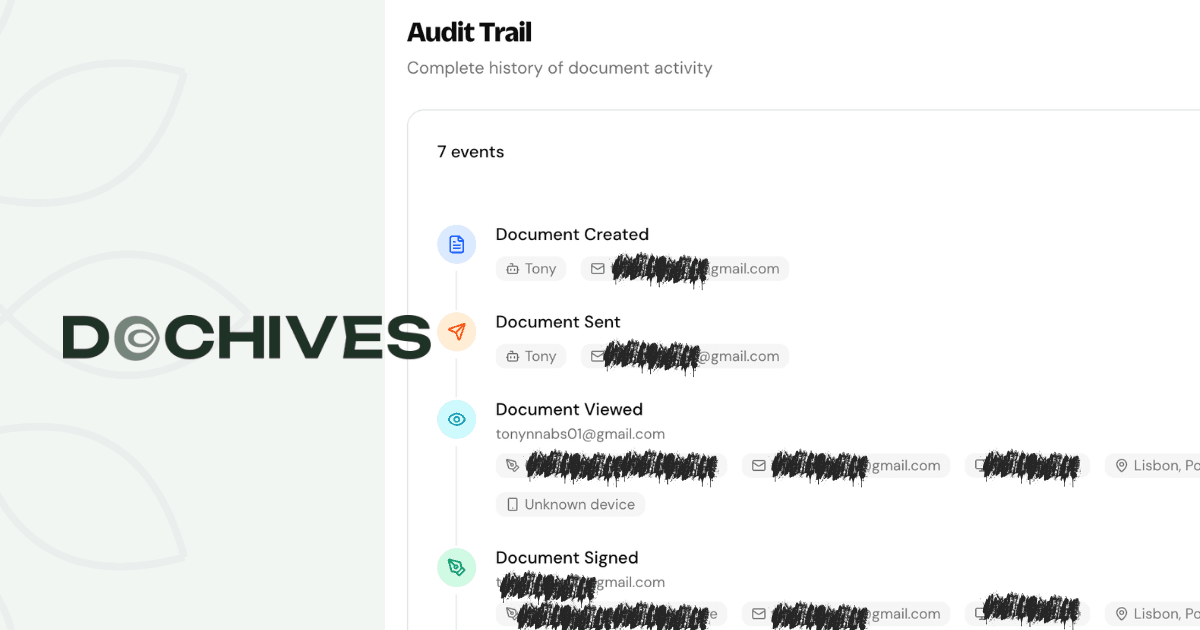
One important nuance: while the law is flexible about what constitutes a signature, it does care about the context. A signature on a napkin holds less evidentiary weight than one on a formal contract with witnesses. Not because the signature itself is less valid, but because it's harder to prove intent and authenticity in an informal setting. That's why audit trails, timestamps, and identity verification matter so much in modern document signing — they strengthen the evidence surrounding the signature, not the signature itself.
Does a Signature Have to Be Your Full Name?
This is probably the most common version of the question, and the answer is a clear no. Your signature does not have to be your full name. It doesn't have to be any part of your name.
Think about it this way. Have you ever looked closely at a celebrity's autograph? Most of them are completely illegible. Some are just a swoopy line with a dot. Others are an elaborate symbol that bears zero resemblance to the person's actual name. And yet nobody questions whether those signatures are "real." We accept them as authentic because we understand that the person intended them to represent their identity.
The same logic applies to legal signatures. If your signature is just your first name — valid. If it's your first initial and last name — valid. If it's a shortened version of your name that you've used for decades — absolutely valid.
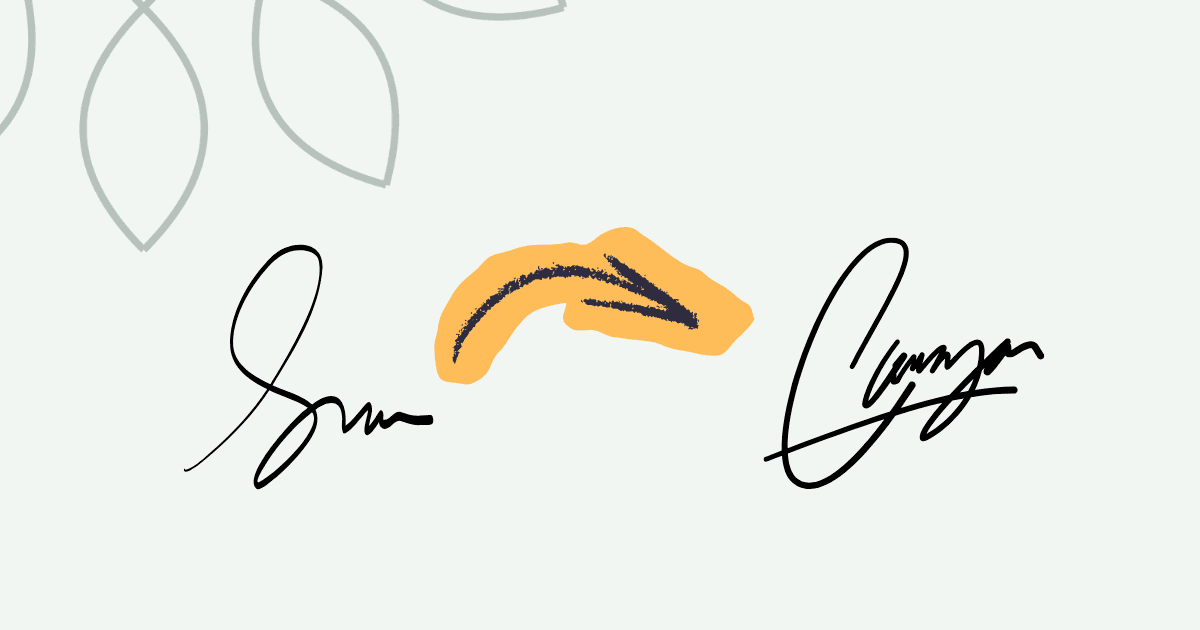
There's a practical reason why people have drifted away from writing out their full legal names as signatures. Speed. Most of us sign dozens of documents a year, if not more. Writing "Christopher Jonathan Rodriguez" in careful cursive every single time would be exhausting. So people abbreviate. They develop quick, recognizable marks that can be dashed off in a second or two. And if you've outgrown your current mark — or simply want something different — you can change your signature anytime without any legal process. The law has always accommodated this reality.
Where confusion sometimes arises is in formal or institutional settings. A bank might ask you to "sign your name" on a signature card, and a new employee might carefully spell out their entire legal name because they think that's what's required. But even in those settings, the bank is really asking you to provide a consistent mark they can compare against future transactions. They're not enforcing a legal requirement that your signature spell out your name — they're creating a reference point for verification.
The distinction matters because it separates two different concerns: legal validity and practical verification. Your scribbled mark is legally valid as a signature regardless of what it looks like. But for practical purposes, having a consistent signature that others can recognize and compare makes the verification process smoother. Those are two different things, and conflating them is where most of the confusion lives.
Here's another way to think about it. Imagine you sign a contract with a simple "J" — just the letter J, nothing else. Is that contract enforceable? Yes, as long as you intended that J to be your signature. Could someone challenge it later? Possibly, but they'd have the burden of proving you didn't intend to sign, which is a tough argument to make when your J appears on the signature line of a document you voluntarily executed.
Can You Use Initials as Your Signature?
Absolutely. Initials are one of the most common forms of signature, and they're perfectly legal.
In fact, initials serve double duty in the document-signing world. They're used both as standalone signatures on full documents and as a way to acknowledge individual pages or specific clauses within longer agreements. If you've ever bought a house, you've probably initialed thirty pages in a row before signing the final page. Each of those initials carried the same legal weight as a full signature.
Why are initials so widely accepted? Because they tick the same fundamental box that every valid signature must tick — they represent a deliberate, intentional act by the signer. When you write "JR" at the bottom of a page, you're making a conscious choice to mark that document. Nobody accidentally writes their initials on a contract.
There are a few contexts where initials are especially common and universally accepted:
Legal documents — Attorneys routinely have clients initial each page of multi-page contracts. This practice isn't technically required by law in most jurisdictions, but it provides strong evidence that the signer reviewed every page, making it harder for them to later claim they didn't read section 14 of the agreement.
Medical forms — Healthcare providers use initial-based consent forms extensively. A patient might initial next to each listed procedure or treatment, confirming they understand and consent to each one individually.
Real estate transactions — Closing documents often require initials on every page of the purchase agreement, disclosure statements, and addenda. It's one of those settings where you'll initial so many times your hand cramps up.
Internal business documents — Expense approvals, time sheets, internal memos — initials are the go-to signature in corporate settings where speed and efficiency matter more than ceremony.
Now, could someone challenge the validity of initials as a signature? In theory, sure. But they'd face an uphill battle. Courts have consistently held that initials constitute a valid signature when applied intentionally. The case law is clear and well-established on this point. Unless someone can demonstrate that the initials were forged, coerced, or applied without understanding, they're going to have a very hard time arguing that initialed documents aren't binding.
One practical tip: if you do use initials as your primary signature, try to be consistent. Use the same initials (first and last, or first, middle, and last) and the same general style each time. This isn't a legal requirement — it just makes your life easier if a signature ever needs to be verified.
What About Symbols, Marks, and "X" Signatures?
Here's where signature law gets really interesting. Not only does your signature not have to be your name — it doesn't even have to contain letters.
The "X" signature has deep historical roots. For most of human history, the majority of people were illiterate. They couldn't write their names even if they wanted to. So when a legal transaction required a mark of agreement, they'd make an X. Sometimes a witness would write the person's name next to the X and add "his mark" or "her mark" to identify who made it. This practice was legally recognized for centuries, and it still is today.
Modern courts continue to uphold X signatures as valid. In situations where a person is physically unable to write — due to injury, disability, or illness — an X or similar mark made in the presence of witnesses is a fully enforceable signature. Some jurisdictions have specific procedures for "mark signatures," typically requiring one or two witnesses to attest that the person made the mark voluntarily.
But it goes beyond the X. Courts have recognized a surprisingly wide range of non-alphabetic signatures:
- Thumbprints — Used in some jurisdictions as an alternative to written signatures, particularly in notarization settings or for individuals who cannot write.
- Stamps and seals — Corporate seals and rubber stamps have long been recognized as valid signatures for organizational documents.
- Unique symbols — Some people develop personal marks or symbols that serve as their signature. As long as the mark is applied with intent, it works.
- Pictorial marks — There are cases where individuals have used small drawings or pictograms as signatures. Unusual? Yes. Invalid? No.
The historical context is fascinating. In medieval Europe, many nobles used personal seals rather than written signatures. A wax seal pressed with a signet ring carried more authority than any handwritten name. The seal was considered more secure because it was harder to forge — you'd need the actual ring to duplicate it. In many ways, that logic mirrors how we think about electronic signatures today, where cryptographic verification provides security that a handwritten name never could.
One more thing worth mentioning: the question of symbols comes up frequently in the context of electronic signatures. When you sign a document on a touchscreen, you might draw something that looks nothing like your name — a squiggly line, a stylized shape, or even just a dot. All of these are legally valid electronic signatures, provided the platform captures the necessary evidence of intent (timestamps, IP addresses, authentication records). The drawn image is just one piece of a larger evidentiary picture.
Does Your Signature Have to Match Your ID?
This is one of those questions where the legal answer and the practical answer diverge.
Legally? No. There is no law in the United States that requires your signature to match the one on your driver's license, passport, or any other form of identification. Your legal signature is whatever mark you choose to use at the time of signing. You could sign your tax returns with one style, your mortgage with another, and your credit card receipts with a third, and all three would be legally valid.
But practically? Consistency helps.
The reason has nothing to do with the law and everything to do with fraud prevention and verification processes. Banks, government agencies, and financial institutions compare signatures as a way to detect unauthorized transactions. When you open a bank account, you provide a "signature card" — a sample signature that the bank keeps on file. If someone later tries to cash a check from your account and the signature doesn't match, the bank may flag it for review.
Does that mean a mismatched signature invalidates a transaction? Not automatically. It just triggers additional scrutiny. The bank might call you to verify the transaction, or they might ask for additional identification. The mismatch raises a flag, but it doesn't void the signature itself.
Here are the situations where signature matching tends to matter most:
Banking and financial services — Banks rely heavily on signature comparison for check verification and large withdrawals. A significantly different signature might delay a transaction, though it won't invalidate it.
Notarized documents — Notaries are trained to compare the signature on the document being notarized with the signature on the signer's identification. A dramatic mismatch might prompt the notary to ask questions, though most notaries understand that signatures evolve over time.
Government forms — Some government agencies, particularly those dealing with immigration, passports, or security clearances, may have stricter expectations around signature consistency. But even here, the emphasis is on verification, not on enforcing a specific format.
International transactions — Different countries have different expectations around signatures. In Japan, for instance, personal seals (hanko) are traditionally used instead of handwritten signatures, though handwritten signatures are gaining acceptance.
For everyday contracts, leases, employment agreements, and the vast majority of business documents? Nobody is comparing your signature to your ID. The signature itself is sufficient evidence of your intent to sign, and that's all the law requires.
The bottom line: you don't need to stress about whether your signature matches your ID. But if you want to minimize friction in banking and notarization settings, developing a reasonably consistent signature style is practical advice — not a legal obligation.
How Electronic Signatures Changed the Rules
Electronic signatures didn't just digitize the signing process — they fundamentally expanded what we consider a "signature" in the first place.
Before the ESIGN Act passed in 2000, there was genuine legal uncertainty about whether clicking a button or typing your name could constitute a binding signature. Some courts had recognized electronic assent in early internet cases, but there was no consistent framework. The ESIGN Act and UETA changed that by establishing that electronic signatures carry the same legal weight as ink-on-paper signatures, as long as all parties consent to conducting business electronically.
What's remarkable is how broad the definition of an electronic signature actually is. Under the ESIGN Act, an electronic signature is "an electronic sound, symbol, or process." That means each of the following qualifies:
- Typed names — Simply typing your name into a signature field on an electronic document counts. No fancy cursive, no drawn signature, just your typed name.
- Clicked checkboxes and buttons — When you click "I Agree" on a terms of service page, that click is an electronic signature. The process of clicking, combined with the context of the agreement, satisfies the legal definition.
- Drawn signatures on touchscreens — Drawing your signature with a finger or stylus on a tablet is probably the closest electronic analog to traditional signing. But legally, it has no more weight than a typed name or a clicked button.
- Email signatures — In some contexts, courts have held that sending an email with your name at the bottom constitutes a signature on the contents of that email, particularly in business negotiations where the parties are clearly agreeing to terms.
- Biometric signatures — Some advanced signing platforms capture pressure, speed, and stroke patterns when you draw your signature on a device. These biometric data points add an extra layer of verification, but they're supplementary — the basic drawn mark is the signature.
The real revolution that electronic signatures brought wasn't in the signature itself — it was in the evidence surrounding it. A handwritten signature on a paper document gives you the mark and nothing else. You might be able to analyze the ink, compare the handwriting, or find fingerprints, but that's about it.
An electronic signature, by contrast, can be accompanied by a rich audit trail: the exact timestamp of signing, the signer's IP address, their browser and device information, how they were authenticated, and a cryptographic hash proving the document hasn't been altered since signing. This evidence package makes electronic signatures, in many ways, more secure and verifiable than their paper counterparts.
The irony is that people often trust handwritten signatures more than electronic ones, even though electronic signatures typically come with far stronger proof of authenticity. It's a perception gap that's slowly closing as more people and organizations experience the security benefits of digital signing platforms.
For anyone still wondering whether their electronic signature needs to look like their handwritten name — it doesn't. Type it, draw it, click it. The law doesn't care about the form. It cares about your intent.
When Your Signature Style Actually Matters
We've established that the law is remarkably flexible about what counts as a signature. But that doesn't mean your signature style is irrelevant in every situation. There are certain contexts where the form and consistency of your signature receive more scrutiny than usual.
Notarized documents are the most common example. A notary public's job is to verify the identity of the signer and confirm that they're signing voluntarily. While a notary won't reject your signature because it doesn't spell out your full name, they will compare it to the signature on your identification document. If the two are wildly different — say, your ID shows a careful cursive signature but you sign the document with a single initial — the notary might ask questions. Most will still proceed after confirming your identity through other means, but the process may take longer.
Wills and estate documents tend to attract more signature scrutiny than almost any other type of document. That's because wills are frequently contested by family members who stand to gain from invalidating them. A signature that looks unusual, inconsistent, or markedly different from the testator's known signature can become a focal point in litigation. Estate attorneys often advise their clients to sign wills using a clear, deliberate version of their signature — not because the law requires it, but because it reduces the surface area for challenges.
Court filings have their own conventions. While courts generally accept any form of signature, some jurisdictions have specific rules about how electronic signatures must be presented on filed documents. Federal courts using the CM/ECF electronic filing system, for instance, accept a typed "/s/ [name]" as a valid signature on electronically filed documents.
International transactions add another layer of complexity. Different countries have different signature traditions and, in some cases, different legal requirements. In parts of East Asia, personal seals (called "hanko" in Japan or "chop" in China) are used alongside or instead of handwritten signatures. In some European countries, the eIDAS regulation establishes different tiers of electronic signatures, with "qualified electronic signatures" receiving the highest level of legal presumption. If you're signing documents across borders, understanding the signature requirements of each jurisdiction involved is important.
Regulated industries like healthcare, finance, and government contracting may have additional requirements. The FDA's 21 CFR Part 11, for instance, establishes detailed requirements for electronic signatures on documents related to pharmaceutical manufacturing and clinical trials. These requirements go beyond simply proving intent — they mandate specific technical controls around authentication, audit trails, and system validation.
The key takeaway here isn't that your signature needs to be a perfect cursive rendition of your legal name. It's that different contexts have different practical expectations, even if the underlying legal standard is the same. Being aware of those expectations helps you avoid unnecessary friction.
People Also Ask
What are the rules for a signature?
The fundamental rule is intent. A signature is legally valid if you made the mark (whatever it looks like) with the intention of signing the document. Beyond that, the rules vary by context. Most contracts require nothing beyond the signature itself. Notarized documents require a notary to verify your identity. Witnessed documents require one or more people to observe you signing. Electronic signatures are governed by the ESIGN Act and UETA in the U.S., which require that all parties consent to electronic transactions.
Is it okay if my signature is just my initials?
Yes, initials are a perfectly valid form of signature. They're widely used in legal, medical, and real estate documents, both as primary signatures and as page-by-page acknowledgments. As long as you apply your initials intentionally on the signature line, they carry the same legal weight as a full name signature.
Does your signature have to be your name in the UK?
No. UK law takes a similar approach to U.S. law on this point. Under the Law of Property (Miscellaneous Provisions) Act 1989 and general common law principles, a signature is any mark made with the intention of authenticating a document. The UK also recognizes electronic signatures under the Electronic Communications Act 2000 and the UK's version of the eIDAS regulation (retained after Brexit). Your signature can be your name, initials, a mark, or any other symbol you intend as your signature. For a deeper dive, see our complete guide to electronic signatures.
How to Create a Signature That Works Everywhere
So your signature doesn't have to be your name. It can be initials, a symbol, a squiggle, or a carefully practiced mark. But with all that freedom, how do you actually choose a signature that serves you well across different situations?
Here are some practical guidelines.
Pick something you can reproduce consistently. This isn't a legal requirement, but it's the single most useful piece of advice about signatures. A consistent signature is easier to verify, less likely to raise flags at banks or notary offices, and harder for someone else to forge convincingly. If your signature is different every time you write it, that's not a legal problem — but it can create practical headaches.
Make it quick to write. You're going to sign your name thousands of times over the course of your life. An elaborate, multi-flourish signature might look impressive, but it's going to slow you down. The best signatures strike a balance between distinctiveness and speed. Most people end up with something that starts recognizably (maybe the first letter of their first and last name) and trails off into a fluid motion that's unique to them.
Consider how it translates digitally. More and more documents are signed electronically. If your signature relies on subtle pen pressure variations or ultra-fine lines, it might not translate well to a touchscreen or trackpad. A bolder, slightly larger signature tends to reproduce better across different digital signing platforms.
Don't overthink it. Seriously. Your signature doesn't need to be a work of art. It doesn't need to be legible. It doesn't need to impress anyone. It just needs to be yours — a mark that you can make consistently and that represents your intent to sign. That's all any signature has ever been.
Practice it a few times. Once you settle on a signature style, write it out a dozen times on scratch paper. Get comfortable with the motion. Let it become muscle memory. The goal is to reach a point where your signature flows naturally without you having to think about each stroke.
And if you're signing documents electronically? The process is even simpler. Most modern signing platforms let you type your name and it generates a signature-style rendering automatically. Or you can draw one on your screen. Either way, the platform captures all the verification evidence — timestamps, IP addresses, authentication records — that makes the signature legally robust regardless of what it looks like.
The era of needing a perfect cursive signature is long gone. What matters now is intent, consistency, and having the right evidence to back it up. Whether you sign with your full name, your initials, or a mark that only you recognize, you're signing — and that's what counts.
Ready to sign documents the easy way? Try Dochives free — send, sign, and track documents with a complete audit trail, no matter what your signature looks like.