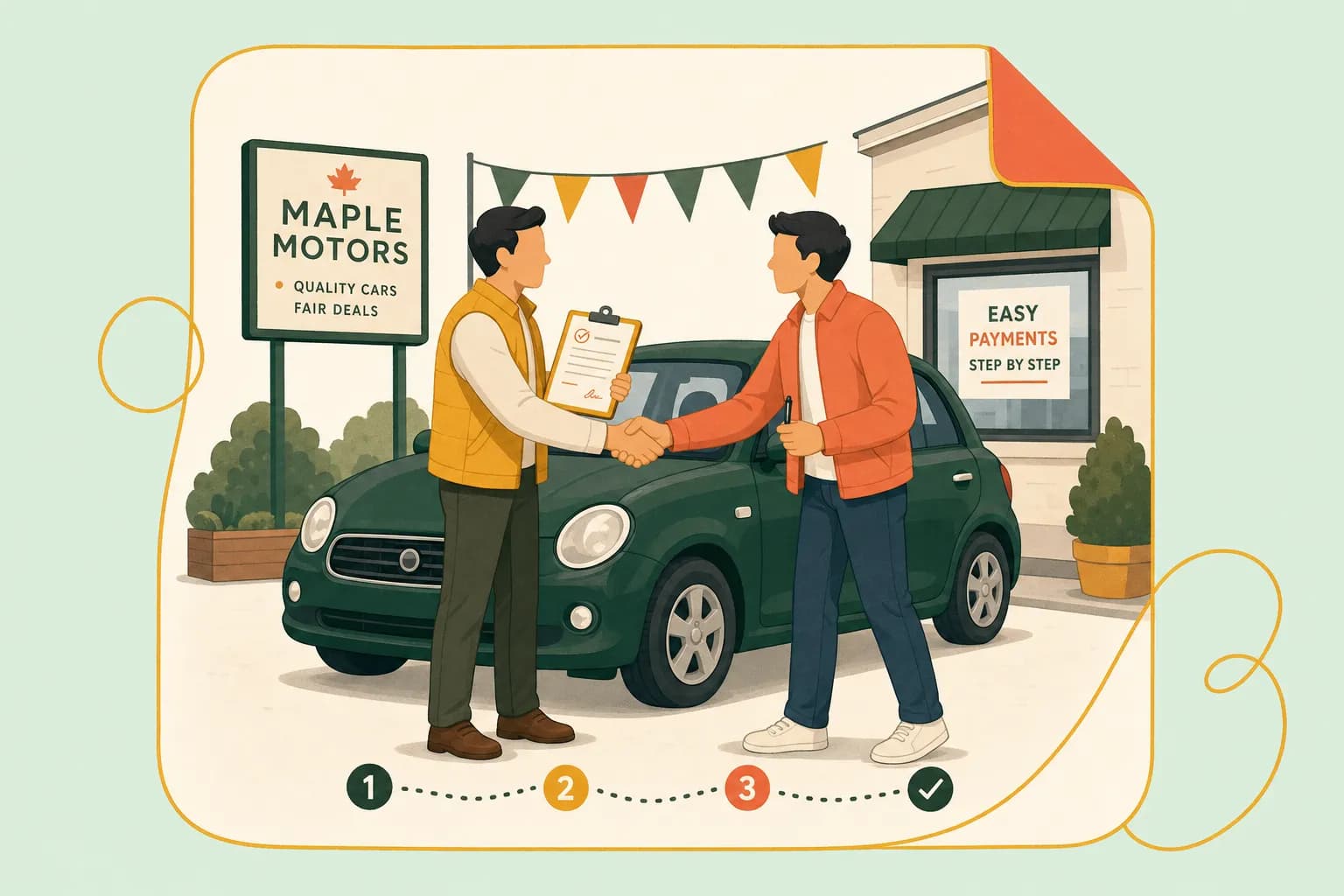
What Is a Vehicle Payment Agreement Template?
A vehicle payment agreement template is a ready-made contract that spells out how a buyer will pay a seller for a car over time instead of handing over the full amount at once. Think of it as the paperwork backbone of a "you pay me in installments, I hand over the title" arrangement. It locks in the sale price, the payment schedule, the interest rate (if any), what happens if a payment gets missed, and who owns the vehicle until the last check clears. If you're selling your truck to a neighbor who can't pay cash upfront, or you're a small business financing a work van for an employee, this document is what keeps the deal from turning into a handshake gone wrong.
Here's the thing people often mix up: a vehicle payment agreement isn't the same as a standard dealer financing contract. When you buy a car from a dealership, you're usually signing paperwork tied to a bank or the dealer's in-house lender — a formal retail installment contract governed by specific state and federal disclosure rules, including protections outlined by the Consumer Financial Protection Bureau. Dealers have compliance teams, standardized forms, and legal obligations baked into that process.
Private-party sales are a different animal entirely. Say you're selling your old sedan directly to a friend, a coworker, or someone you met through a local listing. There's no dealership, no finance department, no automatic paper trail. If they want to pay you in monthly installments rather than one lump sum, you need your own agreement to protect both sides. That's exactly where a vehicle payment agreement template earns its keep — it gives two private individuals (or a small business and a customer) the same kind of clarity a dealer contract would provide, minus the institutional overhead.
A solid template typically covers:
- Vehicle details — make, model, year, VIN, and current condition
- Purchase price and down payment, if any
- Payment schedule — amounts, due dates, and total number of installments
- Interest rate, if you're charging one (and yes, some states cap this — worth checking your local usury laws)
- Default terms — what happens if a payment is late or missed
- Title transfer terms — whether the buyer gets the title immediately or once paid in full
That last point matters more than people realize. Retaining the title until final payment is a common way sellers protect themselves, similar to how a seller financing contract works for real estate. And speaking of contracts, it's worth understanding the elements of a valid contract before you sign anything — a payment agreement is only enforceable if it meets those basic legal requirements, like mutual consent and consideration.
Whether you sign on paper or digitally, the agreement needs to hold up if a disagreement ever lands in small claims court. That's why getting the format — and the signatures — right matters just as much as the terms themselves.
Free Vehicle Payment Agreement Template
Download this free template and customize it for your needs.
Key Elements Every Car Payment Contract Template Should Include
A car payment contract template is only as good as the fields it forces you to fill in. Miss one, and you're left with a document that's more suggestion than agreement. Let's walk through what actually needs to be on the page.
Buyer and seller information. This sounds obvious, but I've seen agreements that just say "John" and "the buyer" with no last names, addresses, or contact details. You need full legal names, current addresses, and phone numbers for both parties. If either party is a business rather than an individual, include the registered business name too—this matters if you ever need to enforce the contract in small claims court.
VIN and vehicle description. The Vehicle Identification Number is non-negotiable. It's the one detail that ties the contract to a specific car and no other. Alongside the VIN, list the make, model, year, color, and current mileage. The National Highway Traffic Safety Administration even offers a free VIN lookup tool if you want to double-check the number matches the vehicle's history before signing anything.
Purchase price. State the total agreed price clearly, in numbers and words if you want to be extra careful. Ambiguity here is where disputes start.
Down payment. How much is being paid upfront, and when? A down payment isn't just a formality—it's often what separates a serious buyer from someone who'll disappear after the first missed payment. Spell out the exact dollar amount and the date it's due.
Installment schedule. This is the heartbeat of the whole agreement. You need the payment amount, frequency (weekly, biweekly, monthly), the due date for each installment, and the total number of payments until the balance is paid off. Think of it like a mini amortization schedule—buyers should be able to look at it and know exactly what they owe on any given month.
Interest rate. If you're charging interest, state the annual percentage rate clearly. Keep in mind that many states cap interest rates on private vehicle sales through usury laws, so it's worth checking your state attorney general's consumer protection page before setting a number.
Late fees and penalties. What happens if a payment is late? Will there be a grace period? A flat late fee or a percentage-based penalty? And critically—what happens on default? Does the seller repossess the vehicle, or does the agreement escalate to legal action? Spelling this out upfront protects both sides from awkward guesswork later.
Miss any of these, and you're basically driving without a seatbelt. Get them all in place, and you've got a document that actually holds up.
Vehicle Payment Agreement vs. Bill of Sale vs. Promissory Note
If you've been shopping around for the right paperwork to sell a car on payments, you've probably run into these three terms and wondered if they're basically the same thing wearing different hats. They're not. Each one does a different job, and mixing them up—or worse, using the wrong one—can leave you without the legal protection you actually need.
Let's break it down.
A bill of sale is proof that ownership changed hands. It records what was sold, for how much, the date, and the parties involved. Think of it as a receipt with legal teeth. Most states require one to register a vehicle title transfer, and the FTC's guidance on buying a used car touches on why this documentation matters for both buyers and sellers. But here's the catch: a bill of sale typically shows a transaction as complete, with payment already made in full. It doesn't handle what happens if the buyer still owes you money over time.
A promissory note is a standalone promise to repay a debt. It's the document a bank would use, or what you'd draft if a friend borrowed $5,000 and agreed to pay you back monthly. Cornell's Legal Information Institute defines it well: it's essentially an IOU with legal weight. A promissory note can absolutely be used in a vehicle sale, but on its own, it doesn't mention the vehicle at all—no VIN, no description of the car, no repossession terms if the buyer stops paying.
A vehicle payment agreement is the document built specifically to bridge that gap. It combines elements of both: it identifies the vehicle being sold (like a bill of sale would) and it lays out the repayment schedule, interest, and consequences of default (like a promissory note would), all tailored to the reality that you're financing a car, not just lending cash.
So which one do you actually need?
- If the buyer is paying you in full, upfront, in one shot—use a bill of sale.
- If you're just formalizing a debt unrelated to a specific asset—a promissory note works.
- If you're selling a car and letting the buyer pay you over time, with the vehicle itself as collateral—you want a vehicle payment agreement (sometimes bundled with a bill of sale as an attachment).
I've seen private sellers try to get by with just a bill of sale for an owner-financed deal, and it almost always backfires. Without payment terms spelled out, there's no clear recourse if the buyer stops paying after month two. A vehicle payment agreement closes that loophole by treating the sale and the financing as one connected legal package, not two separate assumptions.
If you want to skip the guesswork and get all three concepts handled properly, Dochives, try it free and see how much faster professional document signing can be: https://dochives.com
When Do You Need Notarization or Witness Signatures?
Here's the honest answer: it depends on where you live and what you're using the agreement for. There's no single federal rule that says every vehicle payment agreement needs a notary stamp. Instead, you're dealing with a patchwork of state laws, and what flies in Texas might get you a rejected form in New York.
Let's break down when notarization actually matters.
When Notarization Is Usually Required
If your vehicle payment agreement is going to be used to transfer title, register the vehicle, or serve as evidence in a legal dispute, some states want that extra layer of authentication. Notarization exists to prove that the person signing is who they say they are and that they signed willingly, not under duress. That's why states with stricter title transfer rules, like Louisiana, Montana, and West Virginia, often require notarized signatures on documents tied to vehicle sales or ownership changes. You can check your own state's requirements through your local DMV or Secretary of State office; the American Association of Motor Vehicle Administrators is a solid starting point for figuring out which agency handles this in your state.
If you're financing a used car privately, say, selling your truck to a neighbor and letting them pay you in installments, notarization isn't always legally mandatory. But I'd still recommend it. Why? Because if that neighbor stops paying and you end up in small claims court, a notarized agreement carries more weight. Judges tend to trust documents that have been through a formal verification process.
When Witness Signatures Come Into Play
Some states don't require notarization but do want a witness or two. This is more common with promissory notes and certain financing agreements. A witness isn't verifying identity the way a notary does; they're simply confirming the signing actually happened. Think of it as a second set of eyes, someone who can say "yes, I was there, and I saw both parties sign this without anyone twisting an arm."
Witness requirements also vary depending on whether the agreement includes a security interest in the vehicle. If you're essentially creating a lien, similar to what a bank does, some states treat that more seriously and want additional formalities. It's worth reviewing guidance from the Federal Trade Commission on used vehicle sales and financing disclosures, since consumer protection rules sometimes intersect with these requirements.
My Practical Advice
Don't guess. State requirements shift, and getting this wrong can mean your agreement isn't enforceable when you need it most. A quick call to your state's motor vehicle department or a few minutes browsing their website will tell you exactly what's needed.
And once you know what your state requires, using a reliable tool to prepare and sign the document correctly saves you from formatting headaches later. Try Dochives free and see how much faster professional document signing can be, notarization needs and all.
State Rules for Title Transfer and Lien Recording
Here's something that trips up a lot of first-time sellers: your vehicle payment agreement template can be airtight, but if you don't handle the title and lien correctly, you could still end up in a legal mess. Title transfer and lien recording rules are set at the state level, not federal, which means what works in Ohio might get you in trouble in California.
Let's back up. When you sell a car on payments instead of collecting cash upfront, you're essentially acting as a lender. That means you have a financial interest in the vehicle until the buyer pays it off — and you need a way to protect that interest if they stop paying or try to sell the car before it's paid off. This is where lien recording comes in.
Most states allow a seller-financed deal to be recorded as a lien on the vehicle's title, similar to how a bank would record a lien when it finances a car loan. In states like Texas, you'd file a lien through the county tax office, while in states like New York, it runs through the Department of Motor Vehicles directly. Some states, such as Florida, use an electronic lien and title (ELT) system that skips paper entirely. The point is, the process and the paperwork are never identical from state to state, so you can't assume your neighbor's process applies to you.
Why does this matter so much? Because if you never record the lien, your payment agreement is really just a private contract between you and the buyer — it won't stop them from selling the car to someone else or refinancing it without paying you off first. I've heard from sellers who skipped this step, only to watch the buyer sell the car to a third party who had no idea there was still a balance owed. Recording the lien protects you legally and puts other parties on notice.
Timing matters too. Many states require the lien to be recorded within a specific window — sometimes as short as 10 to 30 days from the sale date — or it may not be enforceable against later claims. It's worth checking your state's motor vehicle agency directly; the American Association of Motor Vehicle Administrators maintains links to state DMV title and registration rules if you're not sure where to start.
One more wrinkle: some states require the title to reflect a lienholder before you can legally repossess the vehicle for nonpayment. Skip that step, and you might not have the legal standing to reclaim your car even if your payment agreement says you can.
Bottom line — your car payment contract template is only half the equation. Pair it with the correct state title and lien process, and you'll actually have something enforceable if a buyer stops paying.
Structuring Installment Schedules and Legal Interest Rates
Once you've nailed down the basic terms of your vehicle payment agreement, the next challenge is figuring out how the buyer will actually pay you back — and how much interest, if any, you're allowed to charge along the way. This is where a lot of DIY sellers get tripped up. It's easy to pick a number that sounds fair and slap it on a payment schedule template. But usury laws don't care about what "sounds fair." They care about what's legal in your state.
Let's start with the schedule itself. Most seller-financed car deals use one of two rhythms: monthly or biweekly. Monthly is simpler to track and matches how most buyers get paid if they're on a salary. Biweekly payments, on the other hand, can help buyers pay off the balance faster since they end up making the equivalent of 13 monthly payments a year instead of 12. If your buyer is paid every two weeks from a job, syncing the payment schedule to their paycheck can dramatically reduce missed or late payments — it's just easier to budget around.
Whichever cadence you choose, your template needs to spell out three things clearly: the payment amount, the due date, and what happens if a payment is late. Vague language like "payments due monthly" invites disputes. Specify an exact day — the 1st, the 15th, every other Friday — and state whether there's a grace period before a late fee kicks in.
Now, about interest. If you're charging interest on the unpaid balance, you're stepping into territory governed by state usury laws, which cap the maximum interest rate a private party can charge on a loan. These caps vary widely — some states allow rates in the high teens for private lenders, while others are far more restrictive, especially without a licensing exemption. The Consumer Financial Protection Bureau offers general guidance on installment lending practices, and it's worth cross-referencing your state attorney general's website before finalizing a number.
Here's a practical tip: build an amortization table into your agreement, even a simple one, showing how each payment splits between principal and interest. This isn't just good practice — it protects you if the buyer ever disputes how much they still owe. Free amortization calculators are available online, and plugging in your principal, rate, and term takes just a few minutes.
One more thing worth mentioning: compounding. Most private vehicle payment agreements use simple interest calculated on the remaining balance, not compound interest. Compounding can push your effective rate above legal limits without you realizing it, so keep the math straightforward.
If you're unsure whether your proposed rate crosses into usury territory, it's worth a quick consult with a local attorney — the cost of that conversation is nothing compared to having a court void your interest charges entirely for exceeding legal limits.
Want a template that already builds in compliant payment schedules and interest calculations? Try Dochives free and see how much faster professional document signing can be: https://dochives.com.
E-Signing vs In-Person Signing: What Holds Up Legally
If you're wondering whether you can just email your car payment contract template back and forth instead of meeting up to sign in person, the short answer is: yes, in almost every case, an electronic signature on a vehicle payment agreement is just as legally binding as a wet-ink signature. That's not a loophole or a workaround — it's federal law. The Electronic Signatures in Global and National Commerce Act (ESIGN Act), passed back in 2000, established that electronic signatures and records can't be denied legal effect simply because they're digital. Most states have also adopted the Uniform Electronic Transactions Act (UETA), which mirrors this at the state level.
So why does the myth persist that e-signatures are somehow "less official"? I think it comes down to habit. Signing something on paper feels weighty — there's a pen, a handshake, maybe a notary stamp involved. E-signing feels almost too easy, like it can't possibly carry the same legal punch. But think about it this way: a signature, whether scrawled by hand or typed and authenticated through a secure platform, exists to prove one thing — that both parties agreed to the terms and intended to be bound by them. The medium doesn't change that intent.
That said, there are a few practical differences worth knowing:
- Audit trails. A good e-signing platform automatically logs timestamps, IP addresses, and identity verification steps. Try replicating that with a paper contract signed at someone's kitchen table — you can't, unless you've got a notary or witness involved.
- Notarization exceptions. As covered earlier, some states still require notarization or witnesses for certain vehicle transactions, especially title transfers. Electronic notarization ("remote online notarization") is legal in many states now, but not all, so check your state DMV or attorney general's office before assuming it applies to you.
- Storage and retrieval. Paper contracts get lost, coffee-stained, or eaten by a glovebox. Digital agreements are easier to store, search, and produce years later if a dispute arises — which matters more than people expect, since installment agreements can run for years.
For a straightforward, two-party vehicle payment agreement — buyer, seller, no lender involved — e-signing is usually all you need. It's faster, it's enforceable, and it removes the friction of scheduling an in-person meeting just to swap signatures. If your state or transaction type requires notarization (like some title transfers), you'll still need that extra step regardless of signing method.
This is exactly the kind of agreement where a purpose-built tool beats a generic PDF. Try Dochives free and see how much faster professional document signing can be — you'll get a legally sound signature, an audit trail, and a clean digital record without chasing anyone down for a pen.
Common Mistakes That Make a Car Payment Contract Unenforceable
I've seen it happen more times than I'd like: two people shake hands on a car deal, scribble a few terms on notebook paper, and assume it'll hold up if things go sideways. It usually doesn't. A vehicle payment agreement is only as strong as its weakest clause, and courts are surprisingly picky about the details. Let's walk through the mistakes that quietly sabotage these contracts.
Vague or missing payment terms. "Buyer will pay seller over time" isn't a payment schedule — it's a wish. If your contract doesn't spell out the exact amount, due dates, payment method, and what happens after the final installment, a judge may have nothing concrete to enforce. Specificity is your friend here.
No default or remedy clause. What happens if the buyer misses three payments in a row? If your agreement doesn't say, you're left arguing over what's "reasonable," which is a slow and expensive way to find out. Spell out grace periods, late fees, and repossession rights up front.
Charging interest above your state's usury limit. Every state caps how much interest you can legally charge on private loans, and these caps vary widely. Charge more than allowed, and you risk having the interest provision — or sometimes the whole contract — thrown out. The National Consumer Law Center has good background on how usury protections work if you want to dig deeper.
Skipping signatures or dating errors. This sounds obvious, but I've reviewed plenty of contracts missing a signature line, or where the date was left blank "to fill in later." An unsigned or undated agreement gives either party an easy way to dispute when the deal actually started.
Failing to identify the vehicle precisely. A car payment contract needs the VIN, make, model, year, and odometer reading — not just "the 2019 Honda." Ambiguity about which car was sold has tanked more than one court case.
Ignoring state-specific formalities. Some states require notarization for certain vehicle transfers; others don't. Relying on a generic template without checking your state's requirements — something the Federal Trade Commission's consumer guidance touches on for used car sales — can leave gaps that make enforcement harder.
Using contradictory or outdated boilerplate. Downloading a template from 2015 and layering in your own edits often creates contradictions between clauses. If Section 2 says one interest rate and Section 5 says another, good luck getting a court to sort that out cleanly.
The fix for all of this isn't complicated — it's consistency and clarity, backed by a template built to hold up. Try Dochives free and see how much faster professional document signing can be: https://dochives.com.
What Happens If the Buyer Defaults: Repossession and Remedies
Nobody drafts a car payment contract expecting it to fail. But if you're selling a vehicle on installment terms, you need to plan for the worst case anyway — because missed payments happen more often than any of us would like. So what actually happens when a buyer stops paying? Let's walk through it.
Your Rights as the Seller
If you're financing the sale yourself and retaining a lien on the title, you're essentially acting as a secured creditor. That status matters a lot. Under Article 9 of the Uniform Commercial Code, which most states have adopted in some form, a secured party has the right to repossess collateral — in this case, the vehicle — once the buyer defaults on the agreement. This is where a specific, well-drafted default clause in your contract earns its keep. It should spell out exactly what counts as a default: missing a payment by a certain number of days, failing to maintain insurance, or letting the vehicle fall into serious disrepair, for example.
Without that clause, you're stuck arguing over interpretation instead of enforcing a clear rule. That's a bad spot to be in when you're trying to get your car — or your money — back.
Repossession: What's Actually Allowed
Here's the part that surprises a lot of first-time sellers: in many states, you can repossess a vehicle without going to court first, as long as you don't breach the peace while doing it. That means no physical confrontation, no trespassing into a locked garage, and no threats. The Federal Trade Commission outlines general consumer protections around repossession, and it's worth a read even if you're on the seller's side, because it tells you exactly where the legal line sits.
If breaching the peace is a risk — say, the buyer refuses to hand over the keys or the car is behind a locked gate — you'll likely need to get a court order and possibly involve local law enforcement or a licensed repossession agent. Every state handles this a little differently, so check your state's version of the UCC and any additional consumer protection statutes before you act. The Consumer Financial Protection Bureau also publishes guidance on installment lending practices that's useful context, even though it's mainly aimed at larger lenders.
Remedies Beyond Repossession
Repossessing the car isn't always the end of the story. If the resale value doesn't cover the remaining balance, most contracts allow you to pursue the buyer for the deficiency — the gap between what they owed and what you recovered. On the flip side, if you sell the repossessed vehicle for more than what's owed, some states require you to return the surplus to the buyer. This is why your agreement needs clear language about deficiency balances and disposal of collateral, not just a vague "seller can repossess" line.
You could also pursue standard breach-of-contract remedies: late fees, acceleration clauses that make the entire balance due immediately, or even small claims court for smaller balances.
None of this works well if your original agreement was vague to begin with. A solid template, filled out completely and signed properly, is what gives these remedies real teeth. That's exactly the kind of document Dochives helps you create and sign — clean, complete, and built to hold up if things go sideways. Try Dochives free and see how much faster professional document signing can be.
People Also Ask
What should be included in a vehicle payment agreement template?
At minimum, you want the full names and addresses of both parties, a clear description of the vehicle (VIN, make, model, year, mileage), the total sale price, the down payment, and a breakdown of the remaining balance. Add the payment schedule, interest rate if any, late fee terms, and what happens at default — think of it as the "who, what, when, and what-if" of the deal. If you skip any of these, you're leaving room for a dispute later, so a solid car payment contract template should never feel like it's missing a puzzle piece.
Is a car payment agreement legally binding without a notary?
Yes, in most states a signed payment agreement is legally binding without notarization — a notary mainly verifies identity and signatures, not the terms themselves. That said, some states require notarization for certain vehicle transactions or lien filings, so it's worth checking your local Department of Motor Vehicles rules. When in doubt, notarizing costs little and adds an extra layer of proof if the deal ever ends up in small claims court.
How do you write a payment plan for a car sold between private parties?
Start with the agreed sale price, then subtract any down payment to get the amount financed. Break that remainder into equal installments with specific due dates — monthly is common — and spell out the consequences of a missed payment, like late fees or repossession rights. It also helps to reference the Federal Trade Commission's guidance on used car sales so both sides understand their rights, and to keep a copy of the signed agreement alongside the vehicle's title transfer paperwork.
Ready to skip the guesswork? Try Dochives free and see how much faster professional document signing can be: https://dochives.com